Bringing home a kitten is like bringing home a tiny, fluffy tornado. One minute they’re asleep like an angel, and the next—bam!—they’re chewing your charger cable like it’s spaghetti.
Why? Because your little one is teething.
According to experts at VCA Animal Hospitals, kittens chew things to relieve gum pressure and discomfort during teething, just like human babies. So if they don’t have proper teething toys… your fingers, furniture, and headphones might become the chew toy.
Let’s learn how to choose the right toys that keep your kitten happy, safe, and busy.
What Kind of Toys Do Teething Kittens Need?
Think of kitten toys like school supplies for growing teeth. They help them learn, grow, and stay out of trouble.
✔ Soft and Chew-Friendly Materials
Kittens need toys that don’t hurt their gums. Soft rubber, sponge balls, and plush teething toys are best.
The Cornell Feline Health Center recommends avoiding anything brittle or sharp that may break when chewed.
✔ Right Size Matters (Small but Not Swallowable)
A good rule: If it looks like it can fit inside a kitten’s throat — skip it.
Kittens explore things with their mouth, so toy size is a big safety key.
✔ Textured Toys for Gum Itching Relief
Toys with bumps, ridges, rubber nubs, or rope-like texture give gentle gum massage. It’s like scratching a mosquito bite — instant relief.
✔ Toys That Keep Them Busy and Mentally Active
Teething = energy + curiosity
A bored kitten will find trouble.
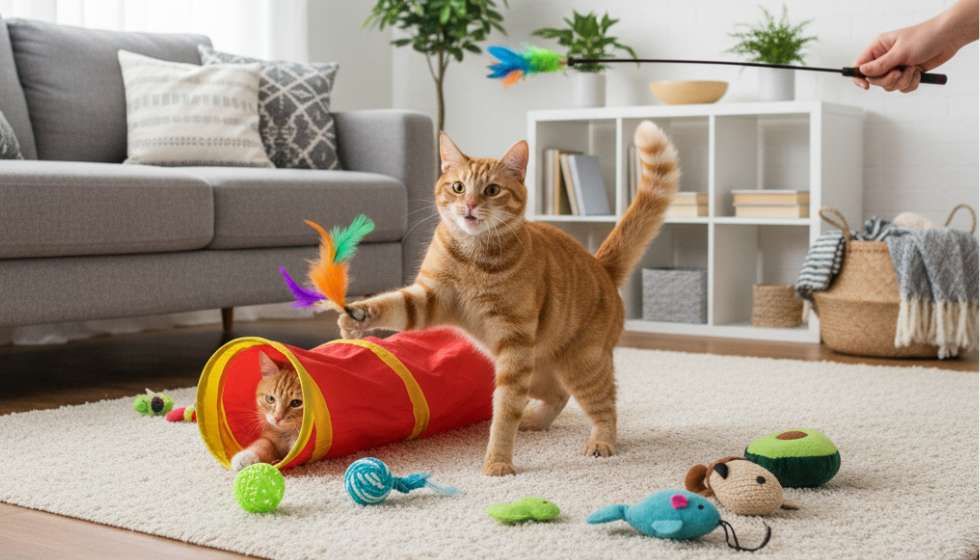
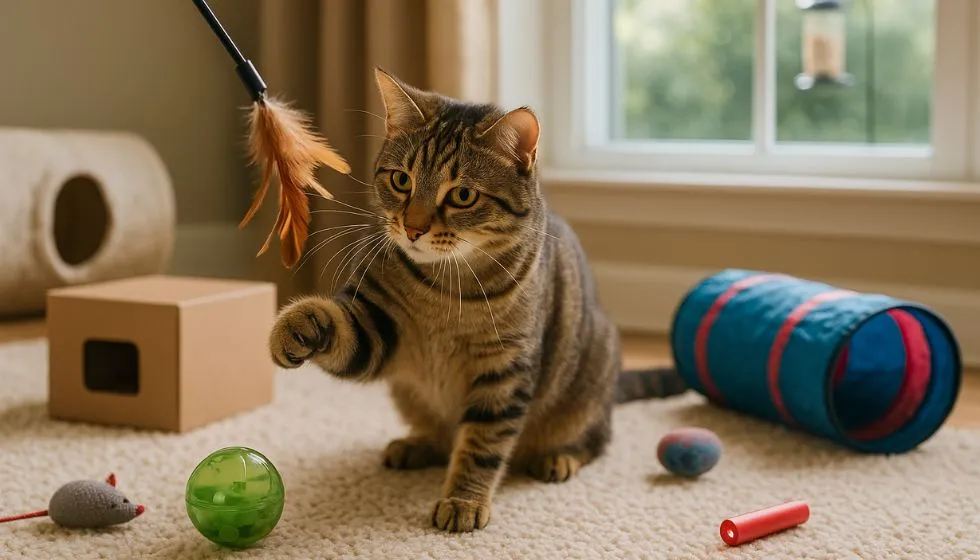
You can pick puzzle toys, crinkle balls, tunnels, or treat-dispensing toys to keep their brain working. Even Cornell Feline Health Center suggests enrichment play for healthy kitten development.
Kittens love exploring and playing indoors, so discovering the best toys for indoor cats can give them safe, engaging options while they go through teething.
Freeze Toys for Extra Comfort
A chilled toy works like a mini ice pop for sore gums.
Freeze a safe rubber toy or cloth for 15–20 minutes and watch your kitten melt into happiness.
(Just don’t freeze anything small or string-like.)
Best Toy Types for Teething Kittens
| Toy Type | Why It’s Good |
|---|---|
| Rubber chew toys | Gentle on gums, safe chewing |
| Teething rings | Designed to relieve gum pressure |
| Plush toys | Soft for chewing, biting, cuddling |
| Crinkle balls | Stimulating sound + active play |
| Puzzle/treat toys | Mental + physical enrichment |
| Mild catnip toys | Encourages playful chewing |
Toys to Avoid (Very Important!)
- Very hard rubber like dog bones
- Cheap breakable plastic
- Long ropes/strings
- Toys smaller than a teaspoon
- Anything sharp or detachable
Safety first — fun comes second.
Final Takeaway
Choosing teething toys for a kitten is like picking shoes for a fast-growing child — comfort and safety matter most.
With the right toys, your kitten develops healthy teeth, stays active, and you save your house from tiny, razor-sharp chewing attacks.
Give them toys that are:
✔ Soft & chew-safe
✔ Properly sized
✔ Textured for gum relief
✔ Mentally engaging
A happy teething kitten = safe furniture + peaceful home.
FAQs
Kittens chew because their gums feel itchy and sore as new teeth grow. Chewing gives relief, just like babies chewing pacifiers.
Most kittens begin teething around 3 to 4 months old and complete it by 6 months. During this time, they chew more than usual.
Soft rubber chew toys, teething rings, plush toys, and textured toys are great options. They massage the gums and reduce discomfort safely.
Not recommended. Dog toys are usually harder and can damage fragile kitten teeth. Always choose toys made specifically for kittens.
Yes! Chilled or frozen chew toys soothe gum pain just like ice on a sore tooth. Freeze a rubber toy for 15–20 minutes for quick relief.
Check these points:
✔ Non-toxic material
✔ No sharp edges
✔ Not small enough to swallow
✔ Doesn’t break into pieces
If it fails even one — don’t give it.
Chewing reduces once teething ends, but active kittens still like to bite when they’re bored or excited. Toys help control this behavior.
No. It might seem cute now, but later it becomes aggressive play. Always redirect chewing to toys instead of fingers or skin.

Claudia Guthrie is a writer and animal enthusiast with experience working for a leading equine veterinary hospital and learning more about canine development and obedience. She has personal experience with dogs, cats, rabbits, gerbils, and horses, and a lifelong interest in researching and writing about the latest in animal care, training, and breed profiles.