Cats are famous for their grooming skills. Their rough tongues and meticulous routines usually keep their fur clean and shiny without much human intervention. Yet, there are times when a bath becomes necessary—whether your cat gets into something sticky, has a skin condition, or struggles with self-grooming. This raises the common question: How often should you bathe a cat?
In this guide, we explore the factors influencing cat bathing frequency, expert recommendations, and practical tips for stress-free baths.
Key Takeaways
- Cats are naturally clean, and most adult cats rarely need regular baths.
- Bathing frequency depends on age, coat type, health conditions, and lifestyle.
- Overbathing can harm your cat’s skin and coat; only bathe as needed.
- Always use cat-safe products and consult your veterinarian for special conditions.
- Patience, gentle handling, and positive reinforcement make baths less stressful.
Understanding Cats’ Natural Grooming Behavior
Cats are naturally clean animals. They spend 50–70% of their waking hours grooming themselves. Grooming serves multiple purposes:
- Removes dirt and debris: Cats’ tongues act as natural brushes, keeping their coat free of dirt and loose fur.
- Distributes natural oils: These oils keep the fur soft, shiny, and waterproof.
- Regulates temperature and skin health: Grooming helps remove excess heat and stimulates blood flow.
Because of these habits, most cats rarely need regular baths unless there’s a specific reason.
Factors That Influence Bathing Frequency
Several factors determine how often a cat may need a bath:
1. Age
- Kittens: They may require occasional help with grooming until they learn proper habits.
- Senior cats: Older cats may have arthritis or dental issues that limit self-grooming, making occasional baths necessary.
2. Health Conditions
Cats with skin allergies, infections, flea infestations, or obesity may need more frequent bathing. Medicated shampoos prescribed by a veterinarian can help manage these issues.
Cats with visual impairments or other special needs may struggle with regular self-grooming, which can increase the need for occasional baths. Supporting these cats with proper enrichment is just as important as hygiene. Gentle stimulation through sensory toys for blind cats encourages movement, reduces stress, and helps maintain overall comfort alongside appropriate grooming care.
3. Coat Type
- Short-haired cats generally need fewer baths.
- Long-haired or dense-coated breeds (e.g., Persians, Maine Coons, Ragdolls) may require regular baths to prevent matting, tangling, and grease buildup.
4. Lifestyle
- Indoor cats usually stay clean and may only need baths occasionally.
- Outdoor cats are exposed to dirt, mud, and debris, which may necessitate more frequent baths.
5. Special Circumstances
Situations like accidental exposure to toxic substances, sticky foods, or strong odors may require immediate bathing.
Recommended Bathing Guidelines
Veterinarians generally agree that most healthy adult cats do not require frequent baths. Here are practical guidelines:
- As Needed: Only bathe your cat when it gets dirty or smelly. Overbathing can strip natural oils, causing dry skin and irritation.
- Every 4–6 Weeks: For cats with long fur or specific health needs, a bath every 4–6 weeks is usually sufficient. Always use gentle, cat-safe shampoos.
- Medical Conditions: Follow your vet’s instructions for cats with fleas, allergies, or skin infections. Some conditions require more frequent baths with medicated products.
- Consult Your Vet: Always seek professional advice if your cat has persistent skin problems or unusual grooming behavior.
Recommended Bathing Frequency by Cat Type and Lifestyle
| Cat Type / Condition | Coat Type | Age Group | Lifestyle / Health Factors | Recommended Bathing Frequency | Notes / Tips |
|---|---|---|---|---|---|
| Indoor, healthy cat | Short-haired | Adult | Normal hygiene | Rarely, only as needed | Spot cleaning or brushing usually sufficient |
| Indoor, healthy cat | Long-haired | Adult | Normal hygiene | Every 6–8 weeks | Helps prevent matting and grease buildup |
| Senior cat | Any | Older | Arthritis or limited grooming | Every 4–6 weeks, if needed | Use gentle, lukewarm baths |
| Kitten | Any | Under 6 months | Learning grooming habits | Occasionally, only if dirty | Use minimal water, mild kitten shampoo |
| Outdoor cat | Short-haired | Adult | Exposure to dirt or mud | Every 4–6 weeks, as needed | Check for parasites; brushing helps between baths |
| Outdoor cat | Long-haired | Adult | Exposure to dirt or mud | Every 3–4 weeks | Regular brushing essential to prevent mats |
| Cat with skin issues | Any | Any | Allergies, infections, fleas | As prescribed by veterinarian | Use medicated shampoos; follow vet instructions |
| Obese or less agile cat | Any | Adult | Difficulty grooming | Every 4–6 weeks, as needed | Brushing and spot cleaning can help in between |
| Flea-prone cat | Any | Any | Flea treatment plan | As directed by vet, usually weekly or biweekly | Use vet-approved flea shampoo |
Tips for Stress-Free Cat Baths
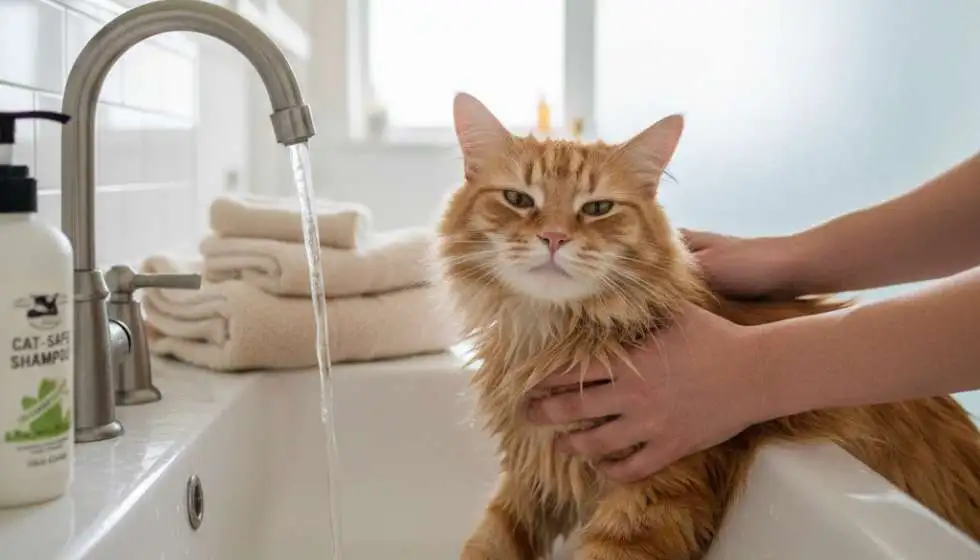
Although it’s crucial to know how frequently to bathe your cat, how bath time is managed can have a big impact on how comfortable your cat is. Anxiety can be lessened by small things like maintaining composure, setting up the space beforehand, and moving gently. It can be much less stressful, safer, and stressful for you and your cat if you know how to give them a bath without stress.
Bathing a cat can be stressful for both you and your pet. Here’s how to make it easier:
1. Use Cat-Safe Products
Only use shampoos formulated for cats. Human or dog shampoos can irritate their sensitive skin.
2. Prepare the Bathing Area
Choose a warm, quiet, and non-slippery space. Have towels, shampoo, and a brush ready.
3. Introduce Water Gradually
Start with a damp cloth or sponge for cats unaccustomed to baths. Gradually introduce them to water to reduce anxiety.
Bath time can be especially stressful for kittens who are sensitive to noise and unfamiliar sensations. Keeping them calm before and after grooming is important for building positive habits. Using soothing play options like low-noise toys for kittens that stay home alone can help reduce anxiety, release pent-up energy, and make grooming routines less overwhelming over time.
4. Be Gentle
Use lukewarm water and avoid the cat’s ears, eyes, and nose. Speak in soothing tones and handle gently to minimize stress.
5. Reward Your Cat
After the bath, give treats, praise, or playtime. Positive reinforcement helps your cat associate baths with good experiences.
When to Skip the Bath
Sometimes, a full bath isn’t necessary. Consider alternatives:
- Spot cleaning with a damp cloth for small dirty areas.
- Dry shampoo or waterless cat wipes for quick cleaning.
- Regular brushing to remove loose fur, dirt, and prevent matting.
With proper care, baths can be a safe, occasional, and beneficial part of your cat’s grooming routine, ensuring a healthy, happy, and shiny feline companion.
Conclusion
Bathing frequency depends on age, coat type, health, and lifestyle. Most healthy adult cats rarely need regular baths. Long-haired cats, outdoor cats, and cats with medical issues may need more frequent bathing. Always use cat-safe products and consult your vet for guidance. With patience, proper technique, and positive reinforcement, bathing can be a manageable and beneficial part of your cat’s grooming routine.
FAQs
Yes. Overbathing can strip natural oils, causing dry skin and irritation. Most cats only need occasional baths.
Yes, but only occasionally. Use minimal water and kitten-safe shampoo.
While they groom naturally, regular brushing is essential, and occasional baths help prevent mats and tangles.
Use gentle handling, lukewarm water, calm speaking, and reward with treats. Introduce water gradually for inexperienced cats.
Yes, but only under veterinary supervision. Medicated shampoos target allergies, infections, or flea infestations.

Christina Donnelly is a writer, editor, and animal welfare advocate who loves to spread cheer in the form of cute animal photos and interesting animal facts.
Christina has worked in digital media for over a decade. Her current 9-to-5 is with Anthem Health, where she works as a content lead.
Title: Writer
Education: Marist College
Location: Brooklyn, New York
Expertise: Cats