Choosing the best cat litter mat can save you from endless cleaning and scattered litter. The right mat traps litter, protects your floors, and keeps your cat comfortable. Look for mats with durable material, non-slip backing, and easy cleaning options to make your home cleaner and your cat happier.
You know that moment when your cat walks out of the litter box like a tiny diva on a runway — except the runway is your floor, and the “sparkle” is litter? Yeah, not the kind of glitter you want around the house.
Let me tell you, I’ve been there. My cat, Mr. Whiskers, used to fling litter like a confetti cannon. I tried sweeping, vacuuming, even pleading (“Please, buddy, have mercy”). Nothing worked — until I found the perfect litter mat. So, if you’re tired of sandy chaos, this guide’s for you.
Why a Litter Mat Actually Matters
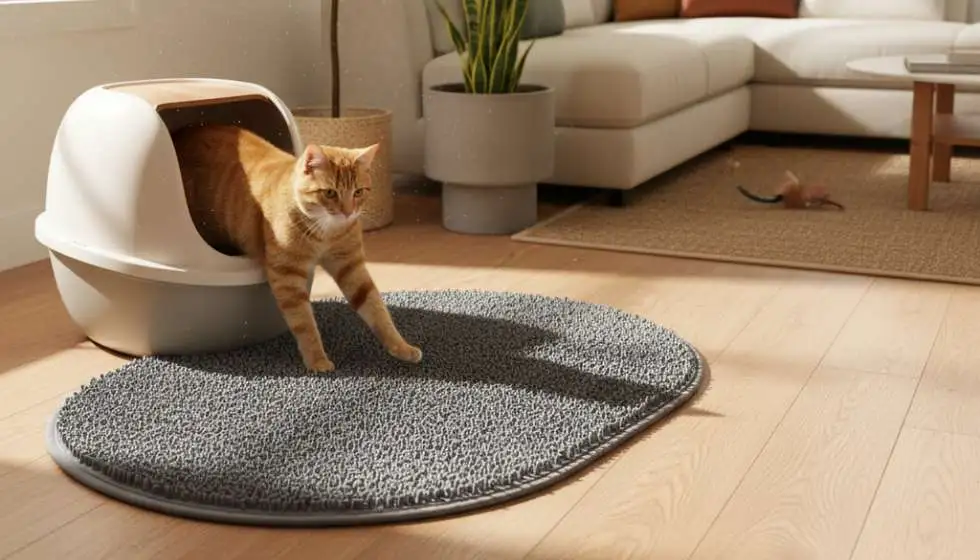
Think of a litter mat as a doormat for your cat — a little welcome zone that says, “Hey, wipe your paws before you strut off.” A good mat saves your floor and your sanity. According to experts, mats with textured surfaces or honeycomb designs trap loose litter effectively before it spreads around your home.
Without one, your home turns into a mini desert. With one, it’s peace, cleanliness, and a lot fewer sighs.
Step 1: Size Up Your Space
Imagine buying a hat three sizes too small — that’s what picking a tiny litter mat feels like. Measure your litter box area. The mat should extend a few inches beyond it on all sides.
The right size depends on your cat’s habits — if your cat leaps out like a gymnast, go bigger!
Pro tip: If you have more than one cat, use a large or double mat setup. You’ll thank yourself later.
Step 2: Choose the Right Material
Picking the wrong mat is like wearing wool socks in summer — uncomfortable and messy.
- Rubber or silicone: Durable, waterproof, easy to clean. Great for messy cats.
- Microfiber or carpet-style: Soft, comfy for paws, but may need frequent cleaning.
- Dual-layer honeycomb mats: Trap litter in the bottom layer — genius design.
The rubber and dual-layer mats are most effective at containing litter and easiest to clean.
Step 3: Look for Smart Design
Not all mats are created equal. Some are flat and boring, others are engineered like litter-catching ninjas.
A study from Modkat highlights that raised ridges, deep grooves, or honeycomb cells significantly reduce litter scatter.
It’s like a trap zone for litter — once it’s in, it’s not getting out.
Step 4: Cleaning Should Be Easy
You’ll clean the litter mat regularly — no escaping that. But if cleaning feels like a full workout, you’ve chosen the wrong one.
Pick mats that:
- Shake out easily outdoors.
- Are waterproof (accidents happen!).
- Can be rinsed or vacuumed quickly.
Remember: the easier it is to clean, the more you’ll actually do it.
Step 5: Comfort + Style
Let’s be honest — we want clean floors and a cute corner. Your mat doesn’t have to look like a garage floor pad.
Choose something soft on your cat’s paws, with a color that fits your room. And don’t skip an anti-slip bottom — because no one wants a sliding litter mat.
Cats are more likely to use litter boxes consistently when the mat feels good under their paws.
Final Thoughts
Choosing the best cat litter mat is like finding your perfect pair of shoes — it should fit, feel good, and make your life easier.
So, remember these five golden rules:
- Measure your litter box area.
- Pick durable, easy-to-clean material.
- Look for trap designs.
- Make cleaning simple.
- Keep it comfy for your cat.
Once you do, your cat will love it, your floor will thank you, and your broom can finally take a break.
FAQs
Rubber or silicone mats are usually best because they’re durable, waterproof, and easy to clean. These materials trap litter better and last longer than soft fabric mats.
Your mat should be at least as wide as the litter box and extend a few inches on each side. I
recommends going larger if your cat jumps or digs a lot — it keeps more litter from escaping.
Try to clean it once or twice a week. Shake out the trapped litter, vacuum if needed, and wash it with mild soap and water. A quick rinse helps prevent odor buildup and keeps your cat’s paws clean.
Some cats dislike the texture or smell of a new mat. Give your cat time to adjust. You can also choose a softer material, like microfiber, that feels gentle on their paws.
Absolutely! A good litter mat saves you hours of sweeping and keeps your home clean. It also helps reduce the spread of bacteria and dust — making life better for both you and your cat.

Claudia Guthrie is a writer and animal enthusiast with experience working for a leading equine veterinary hospital and learning more about canine development and obedience. She has personal experience with dogs, cats, rabbits, gerbils, and horses, and a lifelong interest in researching and writing about the latest in animal care, training, and breed profiles.