Bengal cats are admired for their leopard-like appearance, athletic build, and high intelligence. Unlike many domestic breeds, Bengals are extremely active, curious, and mentally sharp. While they make affectionate and loyal companions, they also require specialized care, enrichment, and attention to thrive.
This in-depth Bengal cat care guide covers nutrition, grooming, health, exercise, mental stimulation, safety, and social needs—everything you need to raise a happy and healthy Bengal cat.
Understanding Bengal Cat Needs
Bengal cats are highly energetic and intelligent, with strong hunting instincts that set them apart from many other breeds. As a hybrid-derived breed, they require consistent stimulation, enrichment, and a structured daily routine to stay balanced. Understanding Bengal cat breed traits helps owners provide proper care and prevent boredom-related behaviors such as excessive vocalization, chewing, or aggression.
Providing the right environment and routine is key to long-term wellbeing.
Diet and Nutrition for Bengal Cats
High-Protein, Meat-Based Diet
Bengal cats thrive on a protein-rich diet that closely mimics what felines eat in the wild. Choose premium cat food where real meat or fish is the first ingredient, such as chicken, turkey, duck, salmon, or lamb.
Avoid foods high in:
- Corn, wheat, or soy
- Artificial preservatives and colors
- Excessive carbohydrates
Wet vs Dry Food Balance
A mix of wet and dry food works best:
- Wet food supports hydration and urinary health
- Dry food can help reduce plaque buildup when used correctly
Many Bengal owners prefer high-quality wet food as the main diet, with dry food offered in controlled portions.
Portion Control & Feeding Schedule
Due to their active metabolism:
- Feed adult Bengals two measured meals per day
- Kittens may require 3–4 small meals daily
Free-feeding is not recommended, as it can lead to overeating and obesity over time.
Fresh Water & Hydration
Bengals are more likely to drink from running water sources. A cat water fountain can significantly improve hydration, which supports kidney and urinary tract health.
Grooming and Hygiene
Coat Care
Bengal cats have short, silky coats that shed minimally, but regular grooming still offers benefits:
- Brush once a week using a soft-bristle or rubber brush
- Helps remove loose hair and distributes natural oils
Nail Trimming
Trim nails every 2–3 weeks to prevent overgrowth and accidental scratches. Providing scratching posts can help maintain nail health naturally.
Dental Hygiene
Dental disease is common in cats but preventable:
- Brush teeth 2–3 times per week with cat-safe toothpaste
- Dental treats and water additives can offer additional support
Bathing (Occasional)
Bengals generally stay clean on their own. Bathe only when necessary using a gentle, cat-formulated shampoo. Many Bengals tolerate water better than other breeds.
Health and Veterinary Care
Regular Veterinary Checkups
Annual vet visits are essential for early detection of health issues. Senior Bengals may benefit from biannual checkups.
Vaccinations & Preventive Care
Ensure vaccinations are kept up to date, including:
- Core feline vaccines
- Rabies (as required)
Use vet-approved prevention for:
- Fleas and ticks
- Intestinal worms
- Heartworm (where applicable)
Common Health Concerns in Bengals
While generally healthy, Bengals may be prone to:
- Hypertrophic cardiomyopathy (HCM)
- Digestive sensitivity
- Dental disease
Routine screening helps manage risks early.
Spaying or Neutering
Spaying or neutering:
- Reduces unwanted behaviors
- Lowers risk of certain cancers
- Improves overall lifespan and temperament
Exercise and Mental Enrichment
Daily Interactive Play
Bengals require daily active play, not passive toys alone. Ideal options include:
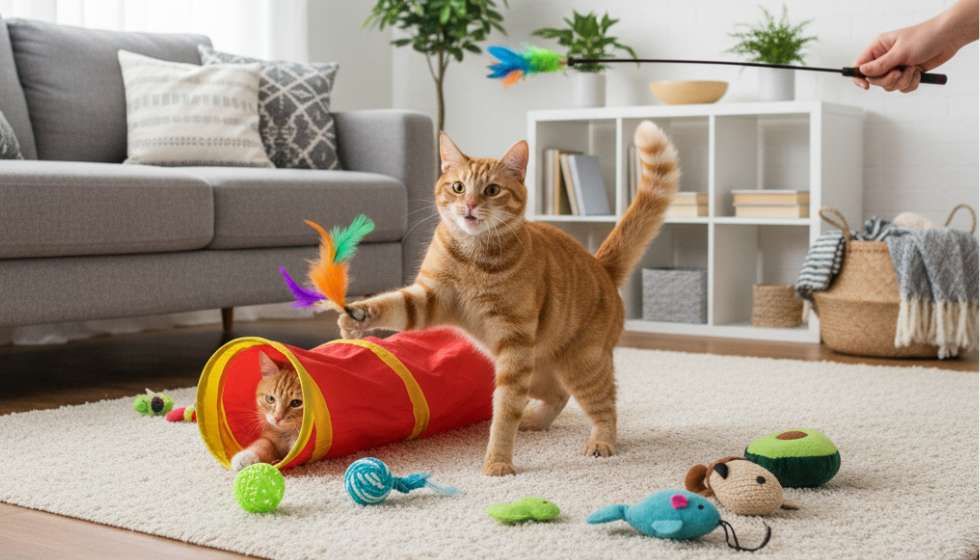
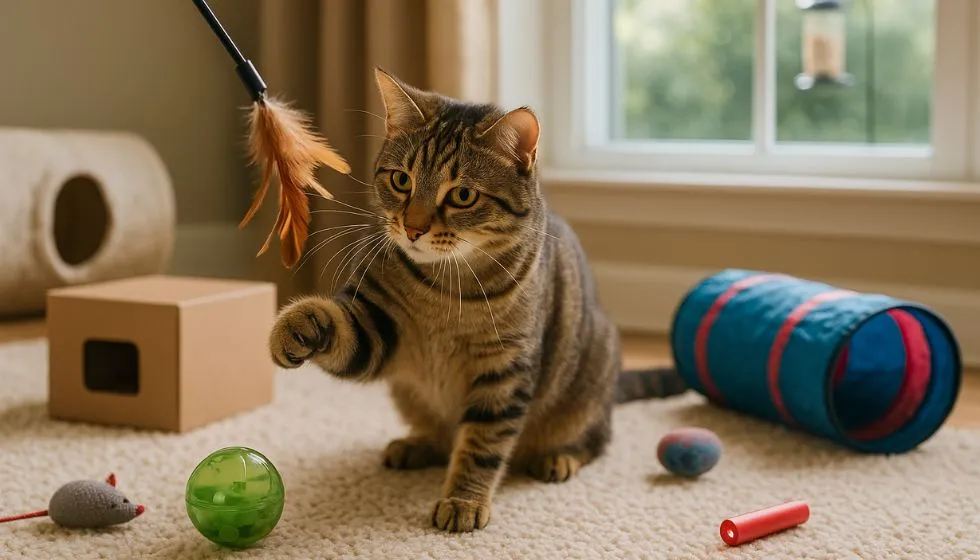
- Feather wands
- Laser toys (end with a physical toy)
- Chase and pounce games
Aim for at least 20–30 minutes of active play per day.
Regular play is essential for keeping Bengal cats mentally and physically satisfied. Daily play sessions using interactive toys for cats help prevent boredom, reduce stress, and support overall behavioral health.
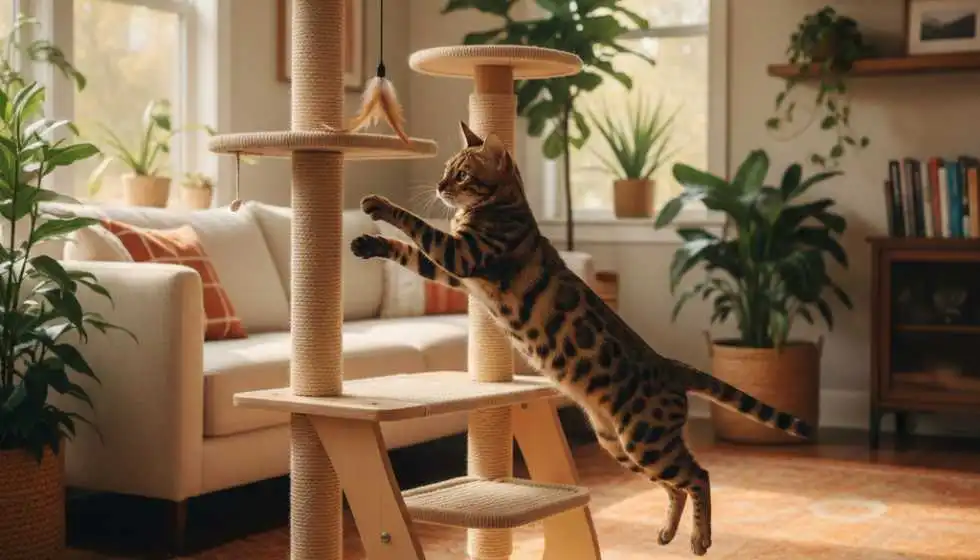
Vertical Space & Climbing
Bengals love height. Provide:
- Tall cat trees
- Wall-mounted shelves
- Window perches
Vertical space reduces stress and prevents destructive behavior.
Puzzle Toys & Feeders
Mental stimulation is just as important as exercise. Puzzle feeders:
- Slow down eating
- Prevent boredom
- Improve problem-solving skills
Safe Outdoor Access
If outdoor exposure is desired:
- Use a secure cat enclosure (catio)
- Harness and leash training for supervised walks
Never allow unsupervised outdoor roaming due to safety risks.
Socialization and Emotional Wellbeing
Daily Interaction
Bengal cats form strong bonds with their owners. Regular interaction helps prevent loneliness and anxiety.
Multi-Cat Homes
Bengals often enjoy companionship, especially if:
- Introduced properly
- Matched with a similarly energetic cat
A compatible companion can reduce boredom when you’re away.
Training and Mental Engagement
Bengals are highly trainable:
- Learn commands, tricks, and leash walking
- Respond well to positive reinforcement
Training sessions provide mental exercise and strengthen bonding.
Home Safety Tips for Bengal Cats
Toxic Household Items
Keep harmful substances out of reach, including:
- Toxic plants (lilies, poinsettias, philodendrons)
- Cleaning chemicals
- Human foods like chocolate and onions
Secure Windows and Doors
Due to their curiosity and agility:
- Install secure window screens
- Check doors and balconies for escape risks
Safe Toys Only
Choose toys designed for cats:
- Avoid small detachable parts
- Inspect toys regularly for damage
Rotate toys to maintain interest and safety.
Final Thoughts
Caring for a Bengal cat goes beyond basic feeding and grooming. Their intelligence, athleticism, and social nature require consistent engagement, enrichment, and attentive care. When their physical and mental needs are met, Bengals reward their owners with affection, loyalty, and endless entertainment.
With the right routine, environment, and attention, your Bengal cat can live a long, healthy, and fulfilling life.
FAQs
Bengal cats are more active and intelligent than many breeds, requiring regular play, mental stimulation, and attention, but they are easy to groom.
A high-protein, meat-based diet with quality wet food and controlled dry food portions works best for Bengal cats.
Bengal cats need at least 20–30 minutes of active play every day to stay physically and mentally healthy.
With proper socialization, Bengal cats can live well with other cats and even dogs, especially energetic or playful companions.
Yes, Bengal cats can thrive indoors if provided with climbing spaces, enrichment toys, and daily interactive play.

Ashley Bates is a passionate freelance pet writer, lifelong animal lover, and dedicated advocate for pet welfare. Currently studying animal therapy, she uses her experience with rescue animals, pet care, and behavior education to help owners build healthier, happier lives for their cats and dogs. When she isn’t writing, Ashley is often volunteering, fostering, or supporting animal rights in her community.