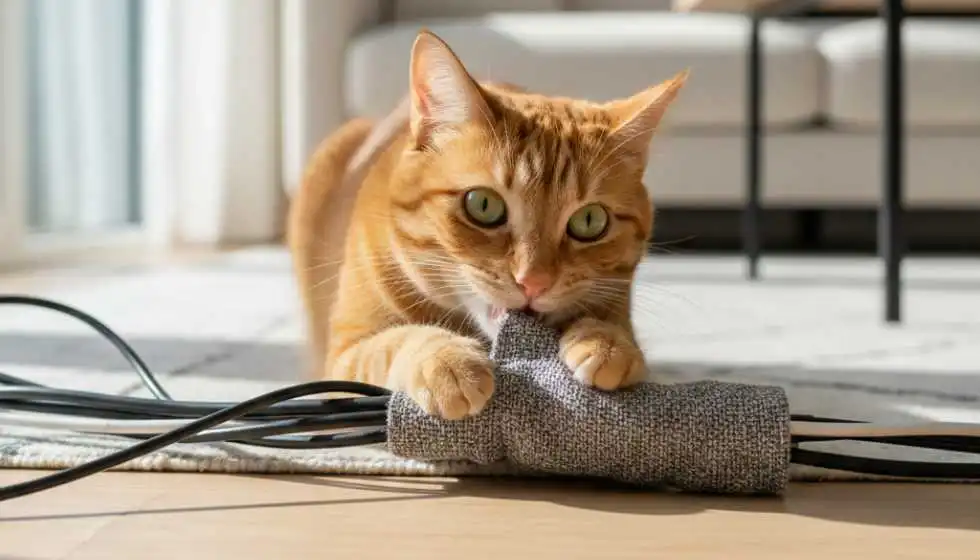
Cats chewing electrical wires is a common but dangerous behavior that can lead to serious injuries, damaged devices, and even house fires. Whether your cat is a curious kitten or an adult cat with persistent habits, this guide explains why cats chew cords and how to stop it safely using vet-approved and practical methods
Why Do Cats Chew Wires?
Understanding the cause helps you fix the problem permanently.
Teething in Kittens
Kittens often chew cords to relieve gum discomfort while teething, especially between 3–6 months of age.
Boredom or Lack of Stimulation
Indoor cats may chew wires when they’re under-stimulated or lacking daily playtime.
Texture and Movement Trigger Instincts
Dangling cables resemble prey like snakes or strings, triggering your cat’s natural hunting behavior.
Stress or Anxiety
Cats may chew cords due to environmental stress, changes in routine, or separation anxiety.
Is Chewing Wires Dangerous for Cats?
Yes—wire chewing can be life-threatening.
- Electric shock or burns to the mouth
- Damage to teeth and gums
- Risk of choking or intestinal blockage
- Fire hazards in the home
Stopping this behavior early is essential for your cat’s safety.
How to Stop a Cat From Chewing Wires (Step-by-Step)
Use Cat-Safe Wire Covers (Best Long-Term Solution)
Best options:
- Split loom tubing
- Spiral cable wraps
- Hard plastic wire protectors
These make wires difficult and uncomfortable to bite.
Apply Cat-Safe Bitter Sprays
Cats dislike bitter flavors, making sprays a strong deterrent.
Safe deterrents:
- Bitter apple spray
- Citrus-based sprays (cat-safe only)
Avoid chili, vinegar, or essential oils—they can be harmful.
Hide and Secure All Loose Cables
Out of sight = out of mind.
Quick fixes:
- Use cord clips along walls
- Route wires behind furniture
- Store chargers in drawers when not in use
This is especially useful in home offices and living rooms.
Redirect Chewing With Safe Alternatives
Give your cat something appropriate to chew.
Good alternatives:
- Rubber chew toys
- Silvervine sticks
- Textured cat toys
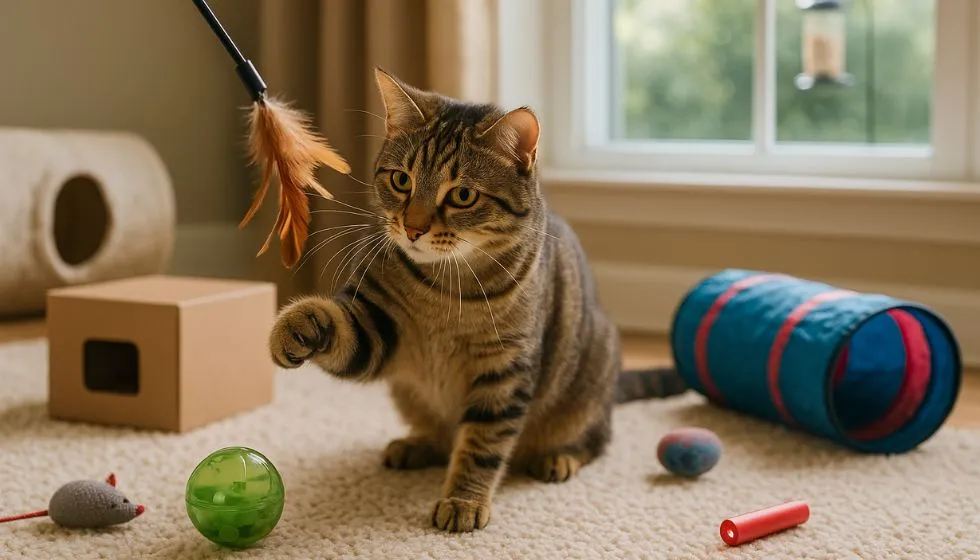
One of the most effective ways to redirect your cat’s chewing behavior is by offering engaging alternatives. Catnip toys for chewing can be especially irresistible, providing both mental stimulation and a safe outlet for your cat’s natural chewing instincts. By introducing a variety of textures and flavors in these toys, you can keep your feline entertained while protecting your wires and cords from damage.
👉 Pair this with daily interactive play to reduce boredom.
Increase Physical & Mental Stimulation
A tired cat is less likely to chew cords.
Effective enrichment ideas:
- Wand toys (10–15 minutes daily)
- Puzzle feeders
- Window perches for outdoor viewing
Providing stimulating activities is key to preventing boredom-related chewing. Interactive toys for cats, such as wand toys, treat puzzles, or motion-activated toys, encourage exercise and mental engagement. Regular play sessions with these toys can reduce the likelihood of your cat turning to wires and cords as a source of entertainment.
Use Taste & Smell Deterrents Cats Hate
Cats naturally avoid certain scents.
Cat-safe deterrents:
- Citrus peels near cables
- Mild lemon scent on cable covers
Never apply substances directly to exposed wires.
What NOT to Do When a Cat Chews Wires
Don’t Punish Your Cat
Yelling or scolding causes fear and anxiety, making the behavior worse.
Don’t Use Electrical Tape Alone
Cats can still bite through tape, risking electric shock.
Don’t Leave Chargers Plugged In Unattended
Especially overnight or when you’re not home.
When dealing with wire-chewing, it’s important to focus on positive reinforcement rather than punishment. Learning how to stop destructive cat behavior safely, like clawing or biting, can prevent stress and fear in your feline while still protecting your household items. Using deterrents combined with safe alternatives ensures a happier and safer environment for both you and your cat.
When to See a Vet or Behaviorist
Seek professional help if:
- Chewing is obsessive or destructive
- Your cat shows signs of anxiety
- The behavior continues despite deterrents
A vet can rule out nutritional deficiencies or stress-related issues.
FAQs
Phone cables are thin, warm, and often dangling—perfect prey-like triggers for cats.
It can be. Stress, boredom, or lack of stimulation are common causes.
Yes. Teething kittens are more prone to chewing cords than adult cats.
It helps, but works best when combined with cable covers and enrichment.

Claudia Guthrie is a writer and animal enthusiast with experience working for a leading equine veterinary hospital and learning more about canine development and obedience. She has personal experience with dogs, cats, rabbits, gerbils, and horses, and a lifelong interest in researching and writing about the latest in animal care, training, and breed profiles.