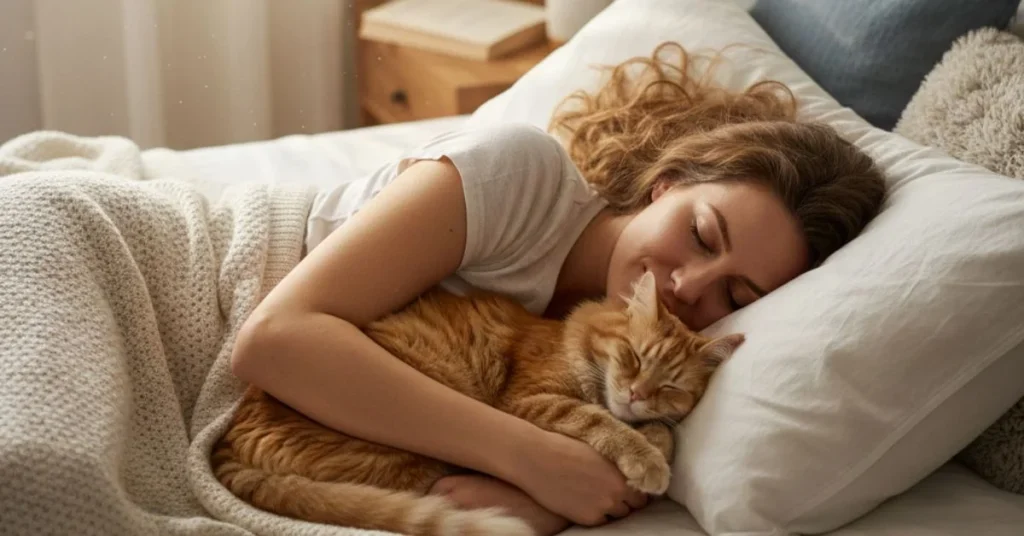
You’re not the only one who has ever woken up with your cat curled up against you. “Why does my cat sleep pressed up against me?” is a question that many cat owners have. The solution goes beyond adorable actions. In actuality, this behavior demonstrates profound biological and emotional causes. I’ll explain everything you need to know in an easy-to-follow manner today.
You’ll discover the reasons behind your cat’s preference for your body as a pillow, the emotional significance of this behavior, and when it conveys comfort rather than worry.
What Your Cat Is Saying When It Snuggles Up Close
Unlike dogs, cats don’t always display affection. Rather, the entire story is conveyed by their body language. It’s not random when someone presses against you. The primary causes are listed below:
1. Safety and Comfort
Cats are looking safe places to sleep. Your cat feels secure when it sleeps next to you. Your breathing pattern and warmth provide comfort. In order to protect themselves from harm, cats in the wild sleep close to their family. Pressed-up sleep therefore equates to comfort and trust.
2. Bonding and Affection
You are viewed as a member of your cat’s close social circle. Their closeness binds them together. As a result, your cat shows you how much it loves you when it chooses your lap or chest.
Things that show bonding include:
- Slow blinking at you before settling in
- Tail wrapped around your arm
- Head resting on your chest
Even though cats seem aloof, they show love quietly. You’ll notice subtle signs like purring and kneading too.
3. Warmth and Security
Warmth is what cats adore. The heat from your body is like a warm blanket. Cats prefer warmth, even in moderate temperatures. As a result, they stay warm, cozy, and at ease when they press up against you.
4. Marking Territory
Scent glands are located on the cheeks and flanks of cats. They combine your scent with theirs when they press against you. Your relationship is strengthened by this behavior, which identifies you as a part of their territory.
Why Transitioning From Sleep to Cuddle Makes Sense
What causes this behavior to occur primarily while you’re sleeping? A cat’s innate instincts hold the key. Cats can get up to 16 hours of sleep every day. Despite their seeming laziness, they are storing energy for periods of activity. Sleep time is therefore a vulnerable moment.
Safety is the top priority for cats. They cuddle close to you because they feel comfortable around you. On the other hand, when they are relaxing, they might stay away from noisy areas and strangers.
When Your Cat’s Sleeping Close Is Emotional Support
Unbelievably, cats can tell when you’re in need of comfort. They are able to detect emotional cues and routines. For instance, your cat might join you sooner if you unwind on the couch after work. This is due to:
- They sense your calm energy
- They enjoy quiet moments with you
- They want to be near you
This highlights the bond and social ties that cats have with us. Interestingly, experts suggest that cats develop attachments much like dogs and even young children do. A study from 2019 backs this up, showing that pets exhibit similar behavior and attachment patterns.
Research conducted by Oregon State University revealed that domestic cats can form secure attachment bonds with their human caregivers, akin to the way children and dogs do, especially when assessed using established attachment methods. If you’re looking for reliable information on how cats attach and behave, check out the Oregon State University report on cat attachment research. Cats express their attachment, trust, and comfort by choosing to be by your side.
What Your Cat’s Body Language Tells You
Understanding your cat’s sleep posture reveals more meaning. Look for these subtle signals:
- Front pressed into you – shows trust
- Face buried in your chest – deep comfort
- Tucked in limbs – secure but relaxed
- Exposed belly while sleeping against you – highest trust
Each position reflects comfort and safety. Moreover, cats change positions often while sleeping, so watch patterns over time.
Practical Tips for Encouraging Healthy Sleep Bonding
Want your cat to feel even more comfortable around you? Try these simple tips:
- Create a warm spot near you so they feel secure and relaxed.
- Use soft blankets or favorite bedding to mimic their comfort zone.
- Maintain calm energy before sleep so your cat feels safe.
- Speak in soft tones to reassure them.
Avoid loud noises or sudden movements when your cat tries to rest on you. They need calm to stay comfortable.
Quick Reasons Cats Sleep Against Owners
Here are the main reasons without the fluff:
- Safety & security
- Affection & bonded attachment
- Warmth preference
- Territory marking
- Emotional support
Do All Cats Sleep This Way?
Not all cats sleep pressed against humans. Some prefer nearby spots instead of contact. This doesn’t mean they don’t trust you. Instead, it reflects personality.
For example:
- Shy cats may sleep beside you
- Older cats might prefer soft beds
- Energetic cats may nap in short bursts
Each cat shows affection differently.
When to Be Concerned
Most cuddle behavior is normal. However, watch for these signs:
- Your cat seems restless at night
- They wake up frequently and stumble
- They avoid sleep altogether
If any of these happen, consult your vet. Night changes in sleep patterns may signal health issues.
How This Behavior Enhances Your Bond
Sleeping against you isn’t just cute. It strengthens your connection. The more your cat chooses your side, the more secure they feel with you. As a result:
- Your cat shows trust
- You build mutual comfort
- Your relationship deepens over time
Final Thoughts
When your cat curls up next to you for a nap, it’s not just about being sleepy. They’re expressing trust, looking for warmth, and deepening your emotional bond. This cozy behavior is a clear indication of their comfort and attachment to you.
So, the next time your furry friend snuggles in, take a moment to appreciate that special connection. Remember, this little act says a lot about the relationship you share.

Ashley Bates is a passionate freelance pet writer, lifelong animal lover, and dedicated advocate for pet welfare. Currently studying animal therapy, she uses her experience with rescue animals, pet care, and behavior education to help owners build healthier, happier lives for their cats and dogs. When she isn’t writing, Ashley is often volunteering, fostering, or supporting animal rights in her community.