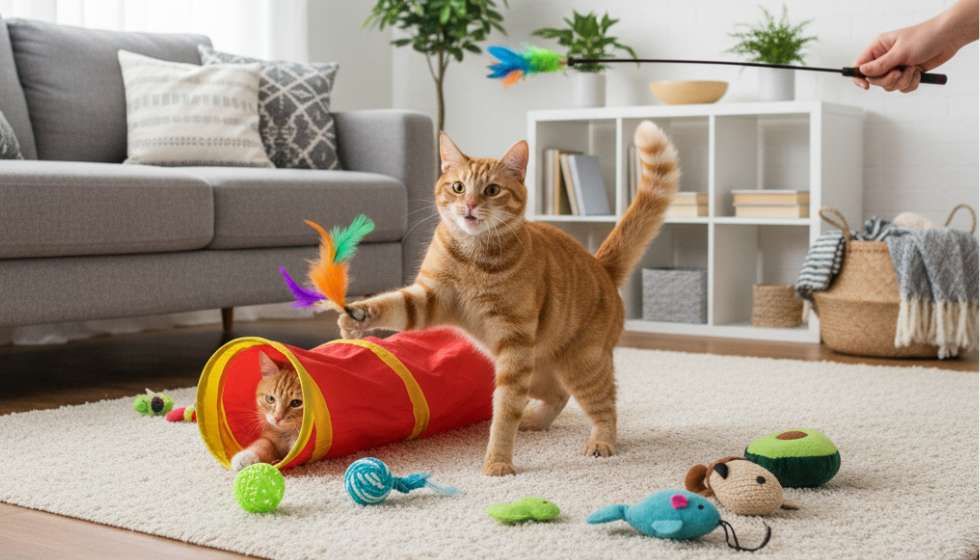
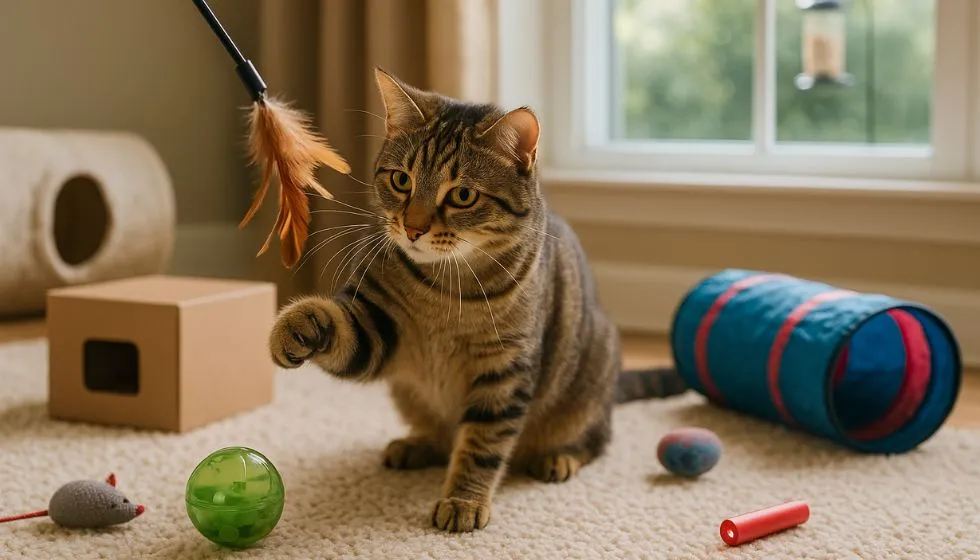
If you’ve ever woken up to find a toy mouse on your pillow or spotted your cat proudly dropping a crinkly ball at your feet, you’ve probably wondered: Why does my cat bring me toys?
Is it a gift? A lesson? Or a strange cat ritual?
The truth is, this behavior is meaningful—and it says a lot about how your cat sees you. From instinct and bonding to boredom and trust, cats bring toys for several fascinating reasons rooted in both evolution and emotion.
Let’s explore what your cat is really trying to tell you.
1. Your Cat Thinks You’re Family (and Possibly a Kitten)
Cats are natural hunters, and in the wild, mother cats teach their kittens how to hunt by bringing them prey. When your cat brings you a toy, she may be expressing the same instinct.
In cat logic, this can mean:
- “You’re part of my family”
- “Let me take care of you”
- “I’m teaching you how to hunt”
Even though the “prey” is a plush mouse or feather toy, the meaning is genuine. To your cat, this is an act of nurturing and inclusion.
Think of it like a child proudly handing you a drawing—messy, adorable, and full of love.
Dr. Mikel Delgado, PhD, Certified Cat Behavior Consultant:
“When cats bring toys to their owners, it often reflects their natural predatory sequence combined with social bonding. They are sharing the ‘reward’ of the hunt.”
2. It’s a Strong Sign of Trust and Emotional Bonding
Cats don’t share prized possessions with just anyone.
When your cat brings you her favorite toy, she’s signaling trust, comfort, and emotional attachment. In feline behavior, sharing resources is a big deal. This is her way of saying:
“You’re safe. You’re important. You’re mine.”
This behavior is especially common in cats that:
- Are closely bonded to one person
- Feel secure in their environment
- View their human as a trusted companion
3. Your Cat Is Inviting You to Play
Often, the message is simple: “Let’s play—together.”
If your cat:
- Drops the toy and stares at you
- Meows or chirps afterward
- Runs a short distance and looks back
She’s actively asking you to engage.
Interactive play is important for cats, especially indoor cats. It helps:
- Burn excess energy
- Reduce stress and anxiety
- Prevent destructive behaviors
- Strengthen your bond
When your cat brings you a toy, she’s choosing you as her play partner.
Play behaviors in domestic cats closely mirror hunting behaviors and are essential for mental and physical well-being, especially in indoor cats.
Indoor cats depend on playtime for both their physical fitness and mental well-being. By selecting the right toys for indoor cats, you can help keep them active and engaged, reducing the chances of them developing boredom-related habits like excessive meowing or dropping toys to get your attention.
4. It’s Pure Hunting Instinct at Work
No matter how pampered your cat is, the hunter instinct never disappears.
Your living room becomes the jungle. The toy mouse becomes prey. And once the “hunt” is complete, your cat follows her instinct to present the catch.
This behavior reflects:
- Natural predatory sequencing (stalk → chase → capture → deliver)
- A sense of accomplishment
- Confidence in her hunting skills
In cat terms, she’s proudly saying: “Look what I caught! I’m good at this!”
International Cat Care (iCatCare):
“Cats may present toys or objects to their owners as part of instinctive behavior, social interaction, or learned responses that result in positive attention.”
5. Your Cat Might Be Seeking Attention (and It Works)
Cats are observant. If bringing you toys gets a reaction—smiling, laughing, talking, or playing—your cat will remember.
Over time, this behavior can become:
- A learned habit
- A way to start interaction
- A fun routine
Even negative attention (“Why are you doing this again?”) can reinforce the behavior. To your cat, any response is engagement.
6. Your Cat May Be “Rewarding” You
Here’s a fun perspective: your cat might think you deserve a reward.
Cats often show appreciation in subtle ways. If you:
- Feed her
- Clean her litter box
- Give affection
- Respect her space
She may return the favor with a gift—her toy.
It’s the feline version of saying, “Good job, human.”
7. Boredom Is a Common Trigger (Especially for Indoor Cats)
If your cat frequently brings toys, especially at odd hours, boredom may be the cause.
Cats need:
- Mental stimulation
- Physical exercise
- Environmental enrichment
If your cat repeatedly brings toys, meows for attention, or seems restless, these may be signs your cat is bored and in need of more daily enrichment, playtime, or environmental stimulation.
Without it, they’ll create their own entertainment—and you become part of the solution.
Consider adding:
- Puzzle feeders
- Wand toys
- Rotating toys weekly
- Short, scheduled play sessions
A stimulated cat is a happier, calmer cat.
Making sure your cat gets plenty of playtime is crucial for both their mental and physical well-being. Engaging them with interactive toys like wand toys, puzzle feeders, and motion-activated balls can really tap into their hunting instincts, keep boredom at bay, and even strengthen the bond you share with your furry friend.
8. Personality Plays a Big Role
Every cat is different.
Some cats:
- Never bring toys
- Prefer socks or hair ties
- Carry toys while meowing loudly
- Drop toys only in specific places
These quirks are shaped by personality, upbringing, and early experiences. Cats raised with more human interaction often show more “sharing” behaviors.
No matter the style, the message is the same: your cat is communicating with you.
9. What Should You Do When Your Cat Brings You a Toy?
The best response? Acknowledge her effort.
You can:
- Smile and speak gently
- Pet her or praise her
- Engage in short playtime
Ignoring her may confuse or disappoint her—after all, she worked hard on that delivery!
You don’t have to play every time, but a small acknowledgment goes a long way in reinforcing trust and security.
Final Thoughts
When your cat brings you toys, it’s never random.
It’s a blend of:
- Instinct
- Trust
- Affection
- Playfulness
- Communication
Whether she’s treating you like family, inviting you to play, or proudly showing off her hunting skills, the message is clear:
You matter to her.
So the next time a fuzzy mouse lands at your feet, smile and say thank you.
In your cat’s eyes, you’ve just received a very special gift.
FAQs
Cats are naturally more active during dawn and dusk. Bringing toys at night is often a sign of boredom, hunting instinct, or a request for attention and play.
Yes, this behavior is completely normal and healthy. It usually indicates trust, bonding, and natural hunting instincts.
In a way, yes. Some cats bring toys because they instinctively want to “teach” or provide for their human, similar to how mother cats teach kittens.
Yes. Acknowledging the behavior with praise or brief playtime strengthens your bond and reassures your cat.
This behavior is linked to hunting success and communication. Your cat may be announcing her “catch” or seeking your attention.

Luxifa Le is a freelance writer and animal science communicator with over six years of professional pet care experience. Passionate about making complex pet health and behavior topics easy to understand, she blends scientific accuracy with compassionate guidance to help pet owners make smarter, more confident decisions. When she isn’t writing, Luxifa is actively involved in the pet care community, advocating for responsible ownership and continued education.