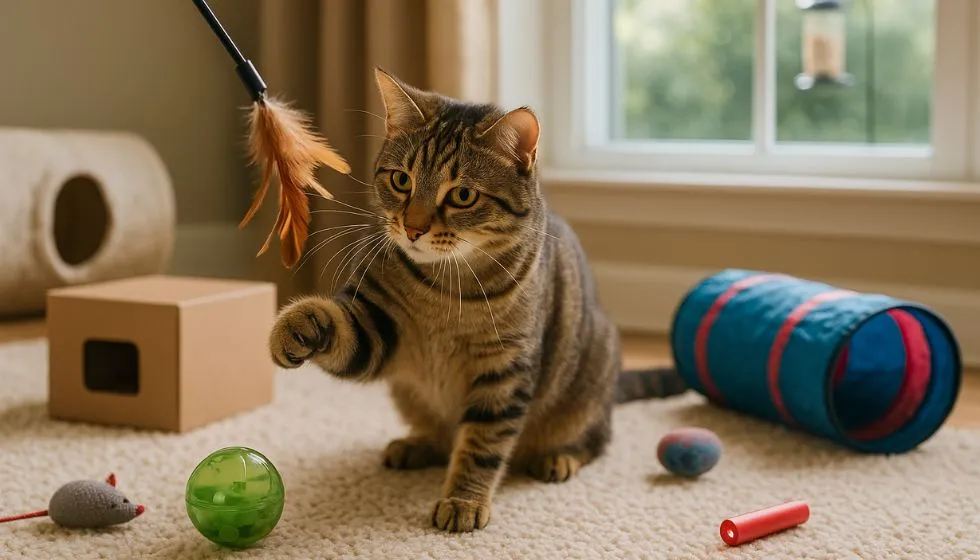
Simple ways to test cat allergies at home with easy steps, symptoms to watch, and expert-backed tips.
Living with a cat can feel like living with a warm walking pillow — soft, comforting, loving. But if your eyes start watering, your throat feels itchy, or you sneeze like a fireworks machine every time your cat jumps into your lap, you might be allergic.
Testing for cat allergy at home is possible. It’s like being a detective in your own house — gathering clues, testing reactions, and making a conclusion.
What is a Cat Allergy?
A cat allergy happens when your immune system thinks harmless cat proteins are enemies. Cats spread proteins through fur, dander (skin flakes), saliva, and urine.
Your immune system is like a guard dog. Sometimes it barks even when no danger is present — that reaction is called an allergy.
If your body is over-reacting to cat allergens, you may notice symptoms.
Common Symptoms of Cat Allergy
Watch for these signs:
- Sneezing repeatedly
- Watery or red eyes
- Itchy nose, skin, or throat
- Stuffy or runny nose
- Coughing or wheezing
- Red patches after touching the cat
If these symptoms appear mostly when around a cat, it is a strong clue.
How to Test for Cat Allergy at Home (Most Effective Methods)
Testing at home won’t give a 100% confirmed result like a hospital test, but it helps you understand your body better.
1. At-Home Allergy Test Kit (Finger-Prick IgE Test)
You can buy a cat allergy home test kit that checks for IgE antibodies, which are produced when your body reacts to allergens.
Steps:
- Buy a test kit
- Prick your finger gently
- Collect a small blood drop
- Follow instructions inside the kit
- Read or lab-submit results
This is the easiest home method — quick, simple, and safe.
2. Exposure Reaction Test (DIY Observation Method)
This test works like checking how your body reacts to contact.
Try this:
- Sit near a cat for 15–30 minutes
- Do not take allergy medicine before
- Notice breathing, eyes, throat, and skin
If symptoms begin shortly after exposure, your body may be reacting to cat allergens.
Professional health research from the Mayo Clinic explains that symptoms usually appear quickly after allergen contact.
If your body reacts quickly around cats, you may also want to read our cat health tips to reduce triggers and make living with a cat easier.
3. Fabric Contact Test (Dander Reaction Check)
Cat dander sticks to fabrics like dust sticks to a TV screen.
To test:
- Hold the cat’s blanket or its bed pillow near your face
- Keep it for 10–20 minutes
- Don’t wash hands immediately
- Track any symptoms for 1–3 hours
If your nose reacts like it’s full of pepper — sneezing, itching, tickling — it suggests sensitivity.
4. Cat-Free Room Control Test
Imagine one room is “allergen-free” like clean air, and the rest of your home is “test zone.” This comparison helps detect allergy trigger areas.
How to do it:
- Choose a room where your cat is never allowed
- Clean deeply — change sheets, vacuum, wipe dust
- Sleep or stay there for 24 hours
- Compare symptoms inside vs outside the room
If symptoms reduce only in the cat-free room, your body is probably reacting to cat allergens.
5. Combination Method (Best Home Accuracy)
Using two or more methods together gives the clearest results.
Example combination test:
| Step | Test |
|---|---|
| 1 | Exposure Test |
| 2 | Fabric Contact Test |
| 3 | Home IgE Test Kit Result |
| 4 | Compare reactions from Cat-Free Room |
If all tests point to the same result — the chance of allergy is high.
Are Home Tests Fully Accurate?
Not always.
Home kits can give false positives or false negatives because they don’t measure reactions as deeply as a medical test.
So think of home testing like looking through fog — you can see shapes, but not all details clearly.
If your symptoms are strong, consider a medical test for confirmation.
What to Do If You Are Allergic (And Still Love Your Cat)
You don’t always need to give up your cat. Many people live with cats even with allergies.
Having a cat in your bedroom can increase allergens and other risks, so it’s helpful to check cat bed risks to see how to prevent issues while keeping your pet nearby.
Try these helpful adjustments:
| Step | Action |
|---|---|
| 1 | Keep cat out of the bedroom |
| 2 | Use an air purifier |
| 3 | Vacuum using HEPA filter |
| 4 | Wash hands after touching cat |
| 5 | Groom the cat weekly |
| 6 | Change bedding often |
Having a cat in your bedroom can affect allergies, so learning about sleeping with cats habits helps you stay comfortable while still enjoying time with your pet.
When You Should Visit a Doctor
Go for medical testing if you experience:
- Wheezing or breathing difficulty
- Asthma-like symptoms
- Chest heaviness
- Symptoms lasting many months
Doctors can do a skin-prick or lab blood test for confirmed diagnosis — fast and accurate.
Final Thoughts
Testing for cat allergy at home is like solving a puzzle with clues scattered around. One test may not tell the full story, but two or three combined can help you understand what your body is trying to say.
- Try exposure tests
- Try home IgE kits
- Compare reactions
- Track symptoms
Your health matters — but love for your pet matters too. With simple adjustments, you can often live happily with your furry friend.
FAQs
You can check by noticing common symptoms such as sneezing, itchy eyes, coughing, or skin rashes when you are near your cat. Staying close to your cat for 15–30 minutes and watching how your body reacts is one of the easiest home clues. Health experts like the Mayo Clinic say symptoms usually appear soon after contact.
The most useful method is a cat allergy home test kit that checks IgE antibodies through a small finger-prick. This works similarly to how doctors test for allergens. However, combining a test kit with symptom observation gives better accuracy.
Yes. You can do a simple exposure test by spending time around your cat and watching for symptoms. You can also try a fabric test by holding your cat’s blanket near your face and tracking reactions. These methods help identify triggers without tools.
Home tests are helpful but not always fully accurate. They may show false positive or negative results. Use home tests as a first step, not the final diagnosis.
Yes, at home you can do a simple skin contact test by letting the cat touch your hand or arm. If redness, itching, or rashes appear, it may suggest a reaction. But medical skin-prick tests (done by doctors) offer clearer results.
Most people feel symptoms within minutes to one hour after being around a cat. The Mayo Clinic
confirms that pet allergy symptoms usually appear quickly after allergen exposure.
Yes, you can develop a cat allergy later in life. Allergies can appear even if you lived with cats for years.
Hormone changes, weaker immune system, or long-term exposure can trigger new reactions.

Christina Donnelly is a writer, editor, and animal welfare advocate who loves to spread cheer in the form of cute animal photos and interesting animal facts.
Christina has worked in digital media for over a decade. She began her career as an Editor at Nickelodeon, then transitioned into lifestyle content, including pets. Her current 9-to-5 is with Anthem Health, where she works as a content lead. A former Spruce editor, Christina has been contributing content to The Spruce Pets for over two years.
Christina has experience managing an animal welfare organization, volunteering at numerous animal shelters and sanctuaries, and writing on all things animals.
Christina received her Bachelor of Arts degree from Marist College in 2010. There, she was the president of FoxP.A.W. (People for Animal Welfare).
Title: Writer
Education: Marist College
Location: Brooklyn, New York
Expertise: Dogs