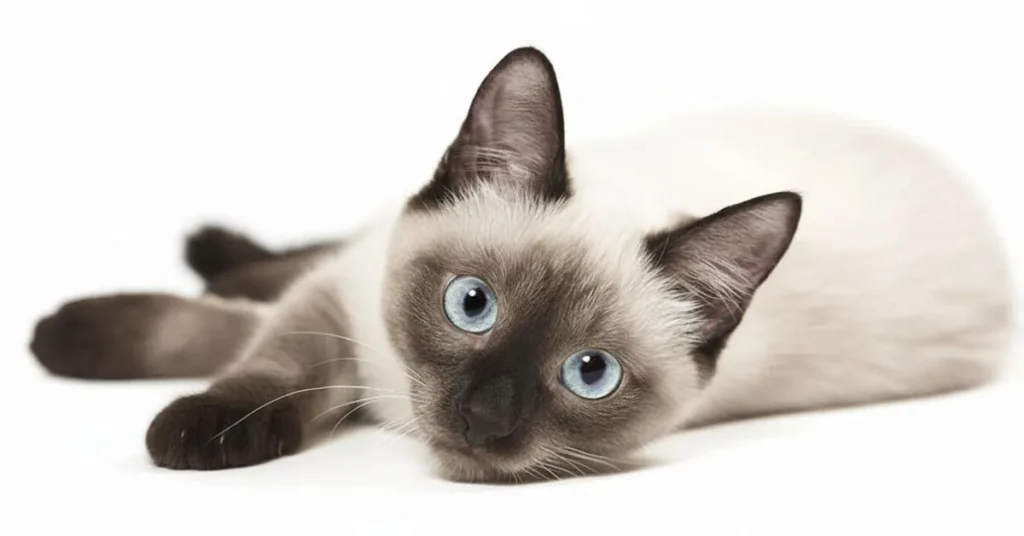
One of the most recognizable and popular cat breeds worldwide is still the Siamese. These cats have a rich history and a personality that sets them apart from other breeds. They are well-known for their sophisticated appearance, piercing blue eyes, and attention-grabbing voice.
The Siamese stands out for its intelligence, affection, and lively energy, whether you’re researching the ideal companion for your home or comparing breeds in an A–Z cat directory.
Siamese Cat Appearance
Siamese cats have a sleek, refined, and athletic physique. Their slender frame, triangular head, and long, tapering lines give them a graceful silhouette. The large, almond-shaped blue eyes are among the breed’s most stunning features—bright, expressive, and deeply communicative.
Coat & Colors (Modern Varieties Included)
The Siamese coat is:
- Short, fine, and glossy
- Close-lying, requiring minimal grooming
- Characterized by its “pointed” color pattern
Point Colors:
- Seal Point
- Chocolate Point
- Blue Point
- Lilac Point
Modern Registered Colors (Expanded by breeders):
- Red/Flame Point
- Cream Point
- Tortie Point
- Tabby (Lynx) Point
Thanks to temperature-sensitive genetics, the cooler parts of the body—ears, tail, paws, and mask—carry darker pigmentation.
Personality of the Siamese Cat
Siamese cats are among the most interactive and expressive breeds you can own.
Key Personality Traits
- Highly Vocal: Known for their deep, raspy “meezer” meow. They “talk” to express needs, affection, or opinions.
- Extremely Social: They form strong bonds with their humans and often follow them from room to room.
- Affectionate: A Siamese will actively seek attention, affection, and will often sit on laps or sleep beside their owners.
- Intelligent: Excellent problem-solvers and fast learners—often compared to dogs in trainability.
- Curious & Energetic: They love puzzle toys, climbing trees, laser games, and exploring new spaces.
Important Note
This breed does not do well alone. Without company or stimulation, they may develop:
- Separation anxiety
- Excessive vocalization
- Destructive behavior
Owners should be ready to interact frequently, or consider adopting a pair.
History & Origins
Originating in Thailand (formerly Siam), Siamese cats were sacred companions believed to bring good fortune. Historical manuscripts from the 14th–18th centuries describe their unique “Wichienmaat” appearance.
Key Historical Points
- Temple Guardians: Legend says Siamese cats served in temples and royal households.
- Introduced to the West: In the late 1800s, gifted to Western diplomats visiting Siam.
- Crystal Palace Exhibition (1871): Their debut fascinated crowds with their exotic looks.
- Influence on Modern Breeds: Siamese genetics contributed to many breeds including Balinese, Himalayan, Ocicat, Tonkinese, and Oriental Shorthair.
Today, they are one of the most popular and recognizable breeds worldwide.
Indoor vs Outdoor Living
Siamese cats are best kept indoors due to:
- Their friendly nature, which makes them vulnerable to theft
- Risks from traffic, dogs, or aggressive cats
- Their tendency to seek human interaction from strangers
- Sun sensitivity around ears and nose
Ideal Indoor Environment
- Cat trees and vertical spaces
- Window perches
- Rotate puzzle toys
- Daily interactive play
- Safe enclosed outdoor spaces (catios) if available
Nutrition & Feeding for Siamese Cats
Siamese cats require a nutrient-rich diet to maintain their sleek muscle mass and energy levels.
Feeding Guidelines
- Choose high-protein foods with meat as the first ingredient.
- Avoid fillers such as corn, soy, and wheat.
- Include a mixture of wet and dry food for hydration and dental balance.
Special Considerations
- High metabolism: They may require slightly more calories than some similar-sized breeds.
- Dental health: Siamese cats can be prone to dental issues—dental kibble or treats help reduce plaque buildup.
- Sensitive stomachs: Some may benefit from grain-free or limited-ingredient diets.
Fresh water should be available at all times.
Grooming Requirements
Siamese cats are low-maintenance when it comes to grooming.
Grooming Routine
- Brushing: Once a week to remove loose hair.
- Ear Checks: Weekly checks for wax buildup or infection.
- Nail Trimming: Every 2–3 weeks.
- Dental Care: Regular brushing or dental treats to prevent gum disease.
Their minimal shedding makes them a good choice for people who prefer cleaner homes.
Health & Lifespan (Modern Health Insights)
Siamese cats are generally healthy, with a lifespan of 15–20 years, often longer with their proper care.
Breed-Associated Health Issues
Some Siamese cats may be predisposed to:
- Respiratory sensitivities
- Dental disease
- Gastrointestinal issues
- Crossed eyes (less common now)
- Heart conditions like hypertrophic cardiomyopathy (HCM)
- Progressive retinal atrophy (PRA)
Routine veterinary checkups are essential for early detection.
Suitability for Family Life
Siamese cats are excellent companions for:
- Families
- Couples
- Single owners who work from home
- Multi-pet households
- Homes with children
Why They Fit Well
- Social and affectionate
- Playful with children
- Intelligent enough to interact safely with dogs
- Adaptable to busy homes
Not Ideal For
- People who travel frequently
- Owners who want a quiet, independent cat
This breed requires emotional connection and mental engagement
Conclusion
Siamese cats are a captivating blend of beauty, intelligence, and affection. Their deep history, expressive personalities, and lively nature make them perfect companions for households that can provide the engagement they need. With proper nutrition, grooming, enrichment, and companionship, a Siamese cat can thrive and bring years of love, joy, and unforgettable memories.
FAQs
Yes. Siamese cats are social, affectionate, and playful, making them ideal for families with children and other pets.
Siamese cats typically live 15–20 years, and many reach their early 20s with proper care and nutrition.
No. Their short coat sheds minimally and requires only weekly brushing.
They require social interaction and mental stimulation but are low-maintenance in grooming.
Siamese cats are naturally expressive and use vocalization to communicate needs, affection, and emotions.
If left alone often, yes. They thrive with a companion (human or feline) to avoid loneliness.
Absolutely. They are safest indoors due to their friendly nature and risk of theft outdoors.
Common issues include dental disease, respiratory sensitivities, HCM, and progressive retinal atrophy.
Yes. They are intelligent and respond well to clicker training, leash training, and puzzle toys.
Loyal, affectionate, vocal, social, energetic, and very people-oriented.

Luxifa Le is a freelance writer and animal science communicator with over six years of professional pet care experience. Passionate about making complex pet health and behavior topics easy to understand, she blends scientific accuracy with compassionate guidance to help pet owners make smarter, more confident decisions. When she isn’t writing, Luxifa is actively involved in the pet care community, advocating for responsible ownership and continued education.