Helping a cat put on weight isn’t just about piling on the food—it’s all about achieving a healthy, controlled weight gain that boosts muscle, immunity, and overall wellbeing. Whether your feline friend is naturally slim, bouncing back from an illness, or just a picky eater, these vet-approved tips will help you safely increase their body weight.
How to Fatten Up a Cat the Healthy Way
1. Start With a Veterinary Checkup (Non-Negotiable)
Before changing food or portions, rule out medical causes of weight loss.
Common issues vets look for:
- Hyperthyroidism (especially in senior cats)
- Diabetes
- Intestinal parasites
- Dental pain or gum disease
- Kidney or gastrointestinal disorders
A vet may also assess your cat’s Body Condition Score (BCS). Cats scoring 1–3/9 are underweight and may need a weight-gain plan.
👉 Never try to fatten a cat without medical clearance.
When ribs and hip bones are easily noticeable, understanding how to tell if a cat is underweight helps determine whether dietary changes or medical care are needed.
2. Choose a High-Calorie, High-Protein Diet
Weight gain should come from protein and fat, not fillers.
What to look for in cat food:
- Protein as the first ingredient (chicken, turkey, salmon)
- Higher fat percentage (18–25% dry matter)
- Minimal carbohydrates
Best food options:
- Kitten food (higher calories & nutrients)
- Recovery or weight-gain formulas (vet-recommended)
- High-quality wet food (more palatable and protein-dense)
Wet food is often easier for underweight or older cats to eat and digest.
3. Increase Calories Gradually (Avoid Digestive Upset)
Sudden overfeeding can cause vomiting or diarrhea.
Safe approach:
- Increase daily calories by 10–15% per week
- Mix new food with old food over 7–10 days
- Monitor stool consistency and appetite
Your vet can help calculate your cat’s daily calorie requirement, based on:
- Ideal weight
- Age
- Activity level
- Health status
4. Feed Small, Frequent Meals
Many underweight cats struggle with large portions.
Best feeding strategy:
- 3–5 small meals per day
- Consistent feeding times
- Quiet, stress-free feeding area
If your cat prefers grazing, free-feeding dry food can help—but only if weight and portions are monitored.
A consistent cat feeding schedule with smaller meals can support digestion while allowing gradual calorie increases throughout the day.
5. Use Vet-Approved Supplements & Food Toppers
Supplements can boost calories without increasing meal size.
Safe options include:
- High-calorie nutritional gels or pastes
- Omega-3 fatty acids (for muscle & coat health)
- Protein-rich food toppers
Natural appetite boosters (occasional use):
- Unsalted chicken broth
- Plain cooked chicken or fish (no seasoning)
Avoid onion, garlic, dairy, or seasoned human food.
6. Improve Appetite Naturally
If your cat eats slowly or inconsistently, small changes can help.
Effective appetite stimulators:
- Warm food slightly to enhance aroma
- Hand-feeding shy or sick cats
- Shallow, wide bowls to prevent whisker stress
If appetite remains poor, your vet may prescribe medical appetite stimulants.
7. Reduce Stress & Competition
Stress is a common reason cats fail to gain weight.
Create a supportive environment:
- Feed cats separately in multi-cat homes
- Provide quiet, predictable routines
- Ensure easy access to food, water, and litter
Anxious cats often burn more calories and eat less.
Using a cat weight chart alongside weekly weigh-ins makes it easier to notice healthy progress before changes become visually obvious.
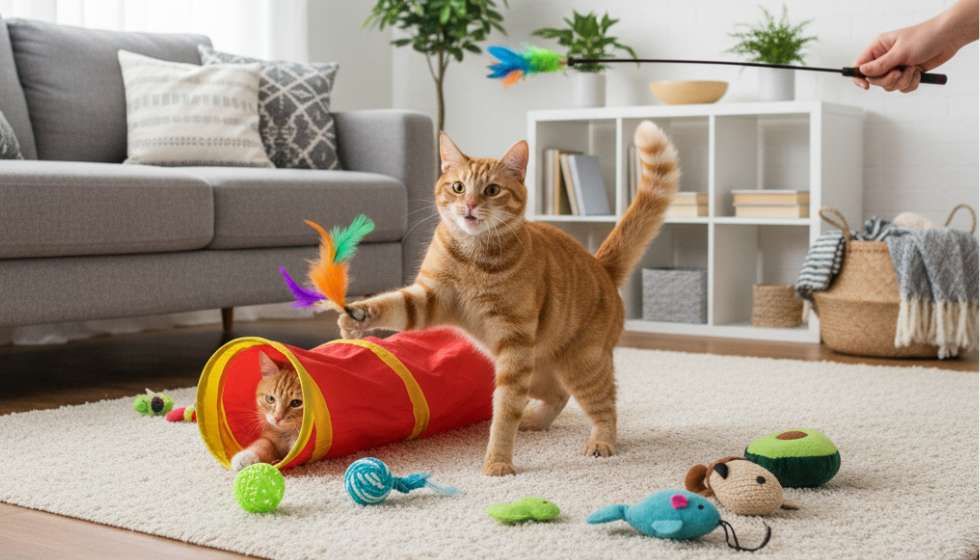
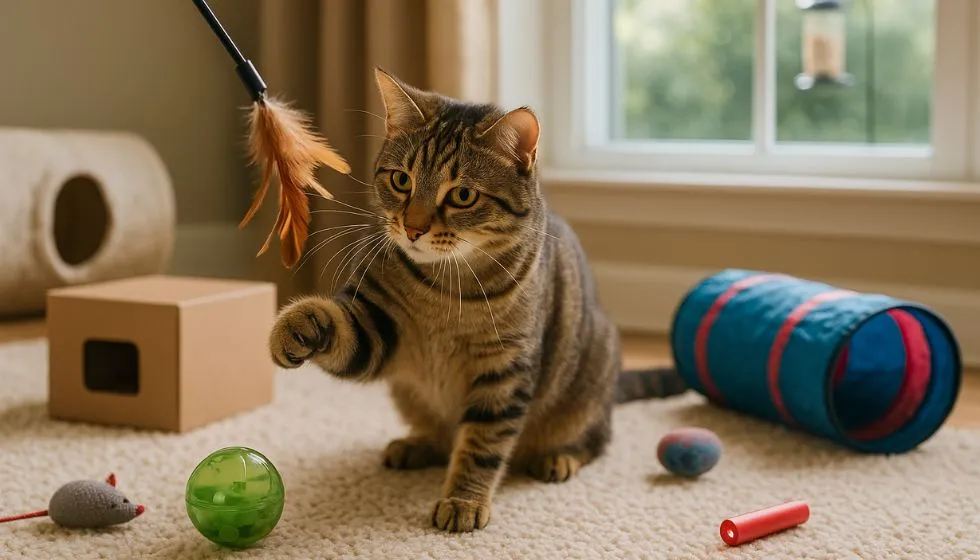
8. Balance Gentle Play With Rest
Moderate activity helps build muscle, not just fat.
Best approach:
- Short, gentle play sessions (5–10 minutes)
- Interactive toys to stimulate appetite
- Plenty of rest and warm sleeping areas
Avoid excessive exercise during weight-gain periods.
How Long Does It Take for a Cat to Gain Weight?
Healthy weight gain is slow and steady.
- Mild underweight: 3–6 weeks
- Severely underweight or recovering cats: several months
A safe rate is 0.25–0.5 pounds (110–225g) per month.
Signs Your Cat Is Gaining Weight Healthily
- Ribs are no longer sharply visible
- Improved energy and grooming
- Shinier coat
- Stable appetite without vomiting
Weigh your cat weekly using the same scale.
Common Mistakes to Avoid
- Overfeeding too fast
- Feeding dog food or human junk foodIgnoring dental pain
- Skipping vet follow-ups
FAQs
If you can clearly feel ribs, spine, or hip bones with little fat cover, your cat may be underweight. A vet can confirm using BCS.
Only plain, vet-approved options in small amounts. Many human foods are toxic to cats.
Persistent appetite loss often signals illness. Consult a vet—do not force feeding.
Yes, but very slowly and under veterinary supervision, as seniors often have hidden health issues.

Ashley Bates is a passionate freelance pet writer, lifelong animal lover, and dedicated advocate for pet welfare. Currently studying animal therapy, she uses her experience with rescue animals, pet care, and behavior education to help owners build healthier, happier lives for their cats and dogs. When she isn’t writing, Ashley is often volunteering, fostering, or supporting animal rights in her community.