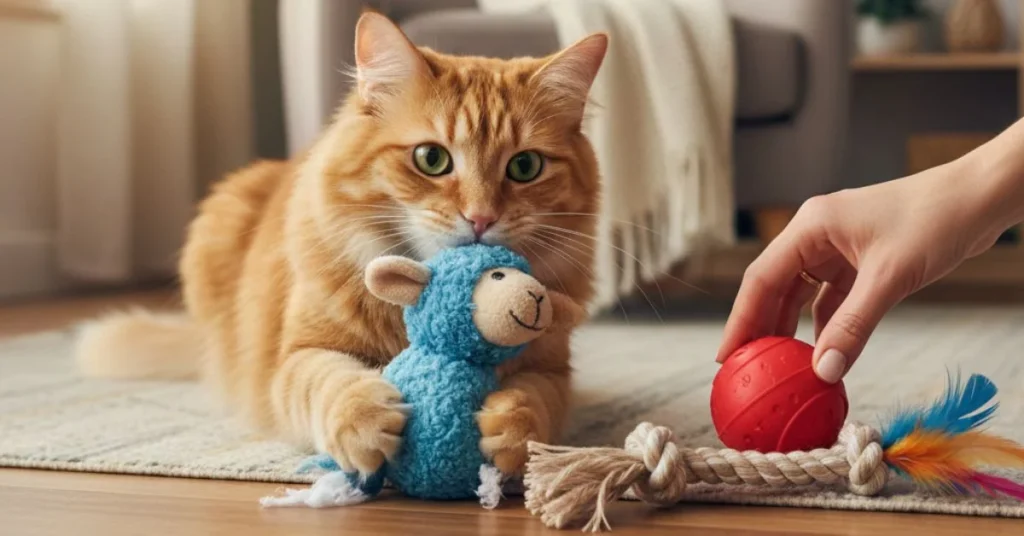
If you are tired of finding your cat’s soft toys ripped open like a stuffed pillow explosion — fluff everywhere, threads hanging, toy unrecognizable — then you’re not alone. Many cats treat plush toys like prey. They kick, chew, bite, and tear them apart as if they’re hunting in the wild.
The good news? You can stop your cat from destroying soft toys. You just need the right approach, a little patience, and a few changes to your cat’s environment.
Quick Takeaways
| Do This | Avoid This |
|---|---|
| Provide durable toys | Only soft fabric toys |
| Daily play sessions | Punishing or shouting |
| Rotate toys weekly | Allowing boredom |
| Store plush toys safely | Leaving toys in open access |
| Add enrichment | Ignoring stress behaviors |
This guide explains why cats tear toys, how to prevent it, and the best safe toy alternatives — in easy English that even young readers can understand.
Why Cats Destroy Soft Toys
1. Natural Hunting Instinct
Cats attack, bite, shake, and tear toys because soft fabric feels like prey. According to the Cornell Feline Health Center, destructive play is commonly linked to normal hunting behaviors — especially if toys are lightweight and fluffy.
2. Boredom or Excess Energy
Cats need daily fun and stimulation. If they don’t get it, they may release energy by destroying toys. Good play prevents destruction.
3. Texture Love & Comfort Chewing
Some cats chew soft fabric for comfort — like a child holding a blanket. It feels soothing.
4. Stress or Lack of Enrichment
A cat without proper activity may use plush toys as a stress outlet. Scratching posts, perches, and climbing areas reduce frustration.
Your Cat Isn’t “Bad,” Just Instinct-Driven
Your cat destroying toys is not misbehavior — it’s instinct + boredom + wrong toy type.
Instead of punishment, you must redirect that natural hunting behavior to safe alternatives.
Think of it like a river: you cannot block the flow, but you can guide it in the right direction.
How to Stop a Cat From Destroying Soft Toys (Ultimate Solutions)
1. Offer Durable Cat-Safe Toys Instead of Plush
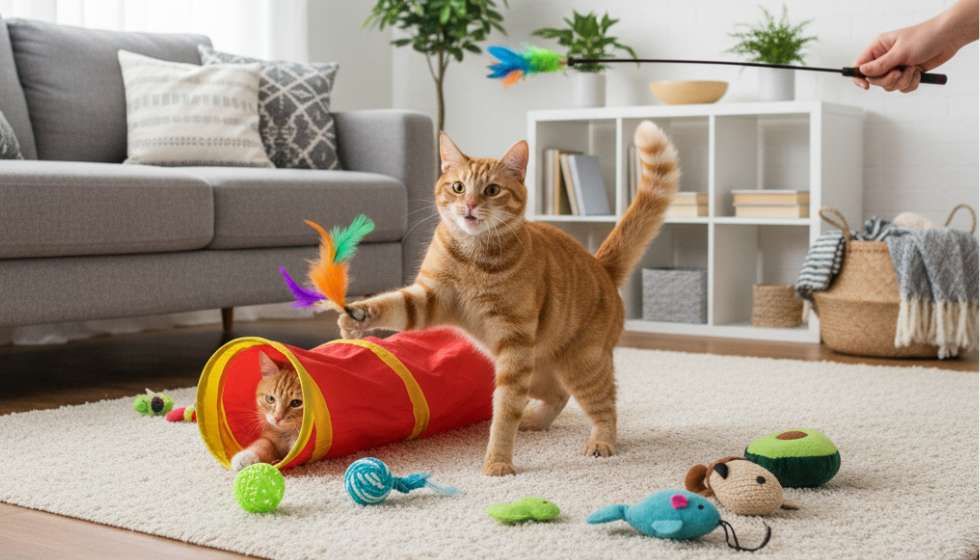
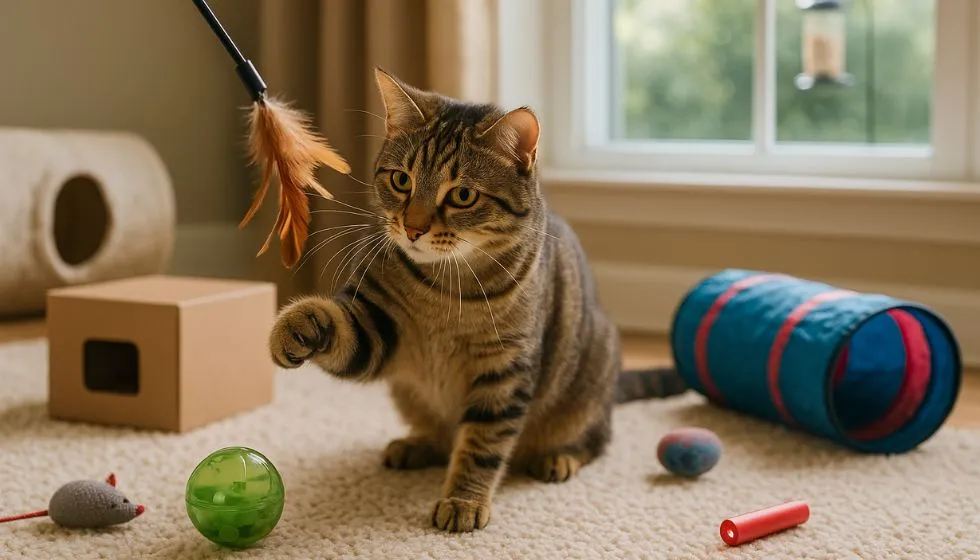
Offer sturdy toys instead of plush ones. Good choices include rubber balls, silicone chew toys, rope toys, feather wands, springs, and puzzle toys. This is supported by guidance from Long Beach Animal Care Services.
Best choices:
| Toy Type | Why it Works |
|---|---|
| Rubber balls | Hard to tear, great bounce |
| Silicone chew toys | Good for biting urges |
| Strong rope toys | Safer for chewing |
| Feather wand toys | Satisfies hunting instinct |
2. Rotate Toys Weekly
Imagine eating the same food every day — boring, right?
Cats feel the same with toys. Swap toys every few days to keep excitement alive.
3. Give Daily Playtime to Release Energy
Just 15–20 minutes of play with:
- feather wand toys
- laser chase
- rolling balls
- cat tunnels
can dramatically reduce destruction.
4. Store Soft Toys Out of Reach
If you want to keep your plush toys safe, place them:
- in drawers
- on shelves
- inside storage baskets
Out of sight often means out of trouble.
5. Give Mental Enrichment & Comfort Objects
Add scratching posts, climbing trees, window perches, cardboard mazes, and scent toys. Environmental enrichment is a proven behavior stabilizer described in the Cornell feline health center.
A bored cat = a destructive cat.
A mentally stimulated cat = calm, playful, happier.
Offer:
- climbing shelves
- puzzle feeders
- scratching posts
- cat window perches
6. Never Punish — Redirect Instead
Punishment makes cats scared, not obedient.
If you catch your cat chewing a soft toy:
▶ Gently remove the toy
▶ Replace it with a safe chew toy
▶ Praise the cat when using the correct toy
Positive direction > negative yelling.
Final Thoughts
Stopping a cat from destroying soft toys isn’t about force — it’s about understanding instincts.
- Give better toys.
- Give attention.
- Give enrichment.
Soon, those soft toys will stop looking like prey — and your house will transform from a battlefield of fluff to a calm, playful, happy cat home.
FAQs
Cats often attack soft toys because they activate hunting instincts. The texture feels like prey, so cats chew, kick, and tear.
Not always. Cats can swallow stuffing or threads, which may cause stomach problems. Safer toys include rubber, rope, silicone, and wand toys.
Redirect instead of scolding. Replace the soft toy with a durable one, reward calm play, and schedule daily activity sessions.
Hard rubber toys, silicone chew toys, bird-feather wand toys, tunnels, and puzzle feeders are longer-lasting and safer.
Yes. A bored cat looks for excitement. Daily interactive play helps prevent destructive chewing.
Not always. You can store them safely and bring them out only under supervision to avoid damage or swallowing hazards.
No — harsh reactions increase stress. Positive redirection works better and keeps your cat emotionally secure.

Luxifa Le is a freelance writer and animal science communicator with over six years of professional pet care experience. Passionate about making complex pet health and behavior topics easy to understand, she blends scientific accuracy with compassionate guidance to help pet owners make smarter, more confident decisions. When she isn’t writing, Luxifa is actively involved in the pet care community, advocating for responsible ownership and continued education.