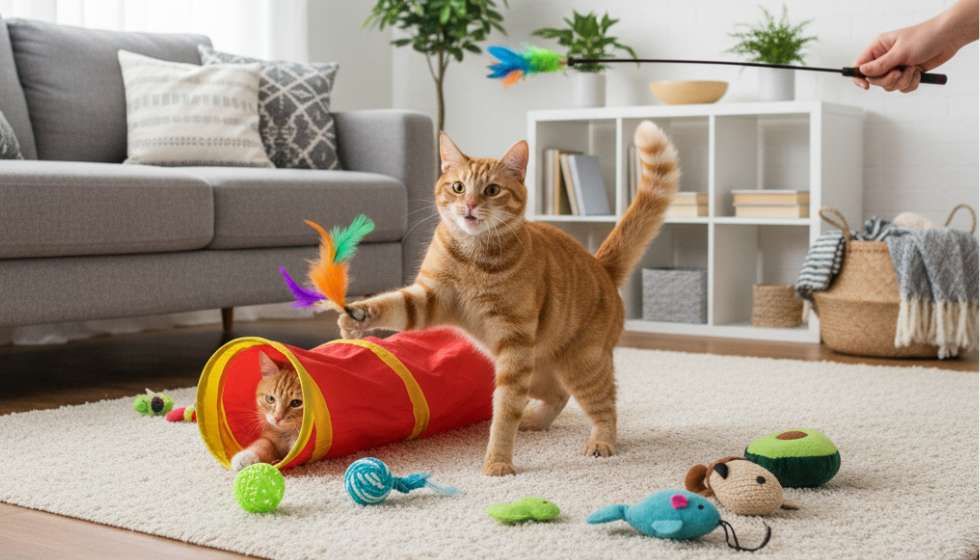
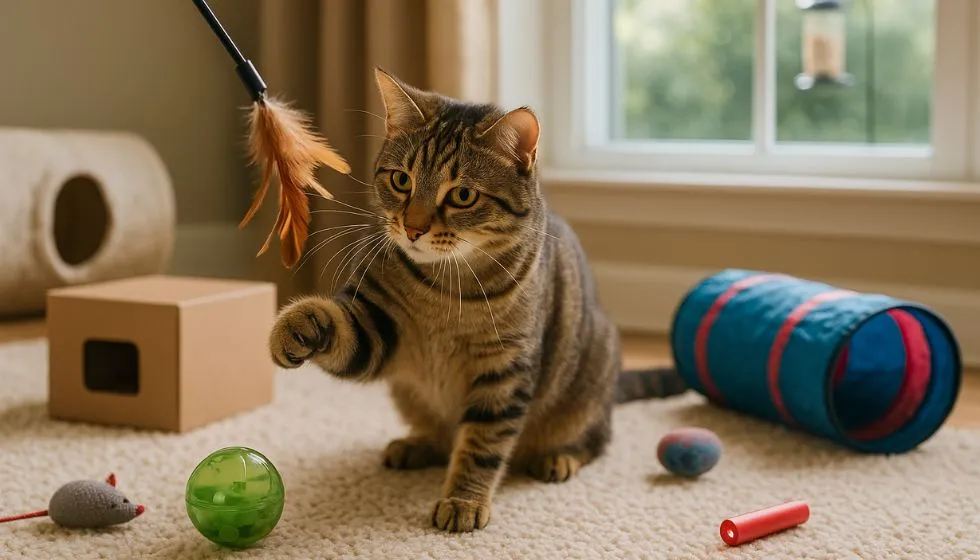
Choosing between DIY and store-bought cat toys isn’t just about saving money — it’s about your cat’s safety, happiness, and well-being. While homemade toys can be fun, affordable, and creative, store-bought options often promise safety and durability. But which one truly keeps your feline friend safer and more entertained?
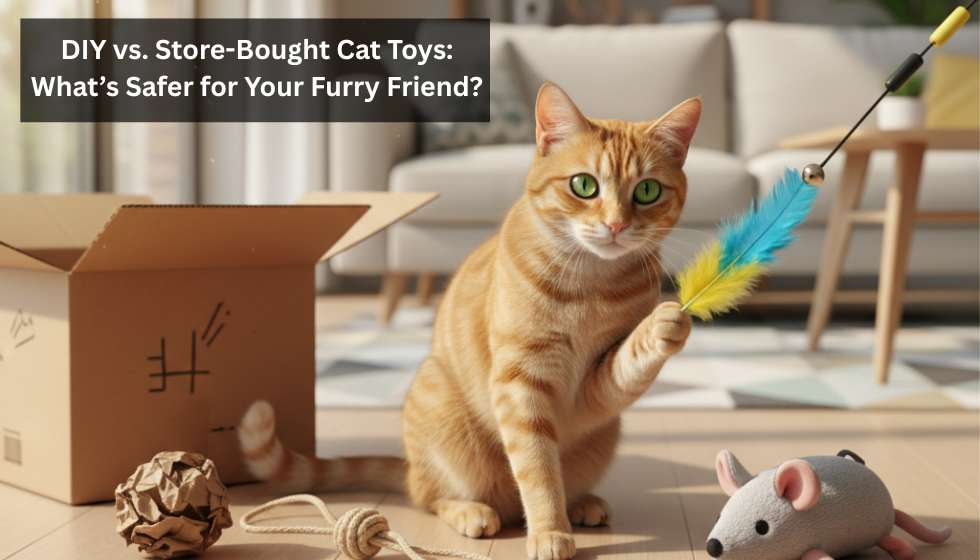
If you’ve ever seen your cat jump on a paper ball or chase a bottle cap, you’ve probably asked yourself, “Do I really need to buy toys when my cat loves the random stuff around the house?” It’s a reasonable query! It can be difficult to decide which cat toy is the best and safest for your pet because there are so many options available, ranging from laser mice to jingling balls.
Let’s discuss the differences between store-bought and do-it-yourself cat toys and determine which one will provide you with peace of mind and a happy feline.
DIY Cat Toys: Fun, Cheap, and Creative
First, let’s talk about do-it-yourself toys. Because they are inexpensive, simple to make, and frequently surprisingly entertaining for cats, homemade cat toys can be fantastic. Simple items like string, paper balls, and cardboard boxes can be transformed into something your cat will love.
Consider this: cats are drawn to fast-moving objects, dangling strings, and crinkly noises. It is possible to make:
- A paper ball from old receipts.
- A feather tied to a string.
- A toilet paper roll stuffed with treats.
All from items you already have at home!
Plus, making cat toys is a fun little project for you too. It’s like arts and crafts, but your cat gets to enjoy the result.
But… here’s the catch.
The Hidden Risks of DIY Cat Toys
Not all homemade toys are safe. Some things that look harmless can actually be dangerous. For example:
- Strings or ribbons can cause choking or block your cat’s stomach if swallowed.
- Plastic bottle caps might have sharp edges.
- Glue, tape, or rubber bands can be toxic or stick to fur.
Because they are interested beings, cats are unable to identify danger. Therefore, always double-check for hazards if you choose to do it yourself. Keep playtime under supervision and use natural, pet-safe materials.
Think of your cat as a lively toddler. A baby shouldn’t be left with small, potentially ingestible objects, would they? Cats are subject to the same rule!
Store-Bought Cat Toys: Safe and Tested
Now discuss cat toys that are purchased from stores. These are the ones that are available online or in pet shops. The fact that they were made with cat safety in mind is a plus.
The majority of toys purchased from stores undergo safety inspections and are constructed from materials that are unlikely to break or injure your cat. To stop loose parts from coming off, many, for instance, use non-toxic dyes, strong fabrics, and hidden stitching.
Some popular safe options include:
- Feather wands with secure attachments.
- Catnip mice made of soft fabric.
- Rolling balls that make noise but can’t be swallowed.
These toys often last longer too. So while you spend a few extra bucks, you’re buying durability and safety.
But Not All Store-Bought Toys Are Perfect
Before you think that store-bought toys are always safe, know that some inexpensive toys can still be dangerous.
There are toys with sharp wires, tiny detachable parts, or subpar fabrics that are poorly constructed. Avoid toys that appear fragile or too small, and always read the labels.
And does your feline enjoy chewing? Steer clear of toys with easily detachable strings or tiny bells. Because cats can destroy anything if they set their minds to it, even store toys need to be inspected on a regular basis!
The Middle Ground: Mix and Match!
Here’s a little secret — you don’t have to choose one side. The best approach is a mix of both DIY and store-bought toys.
Store-bought toys can provide safe, durable playtime options, while DIY toys can keep things exciting and fresh. For example:
- Rotate between a store-bought feather wand and a homemade paper ball.
- Use a catnip-filled toy for calm days and a crinkly paper tunnel for hyper playtime.
Cats love variety. Changing toys now and then keeps them mentally stimulated and prevents boredom.
Tips for Safe Playtime
No matter what type of toy you pick, a few safety rules always help:
- Supervise playtime — especially with new toys.
- Check toys regularly for damage or loose parts.
- Avoid toxic materials — like rubber bands, staples, or glue.
- Keep strings short and never leave them unattended.
- Replace old toys when they start falling apart.
A good rule of thumb? If it looks unsafe for a baby, it’s probably unsafe for your cat too.
Final Thoughts
Ultimately, it makes no difference to your cat whether the toy was purchased from a high-end store or a cereal box. Its safety, interest, and enjoyment are the most important factors.
Though they require extra care to stay safe, do-it-yourself toys can inspire creativity and save money. Store-bought toys are tested and convenient, but you still need to make a good decision.
So why not have the best of both worlds? Let the fun start, mix them up, and watch your cat. After all, every bounce, pounce, and playful meow is worth your cat’s happiness—and safety.

Christina Donnelly is a writer, editor, and animal welfare advocate who loves to spread cheer in the form of cute animal photos and interesting animal facts.
Christina has worked in digital media for over a decade. She began her career as an Editor at Nickelodeon, then transitioned into lifestyle content, including pets. Her current 9-to-5 is with Anthem Health, where she works as a content lead. A former Spruce editor, Christina has been contributing content to The Spruce Pets for over two years.
Christina has experience managing an animal welfare organization, volunteering at numerous animal shelters and sanctuaries, and writing on all things animals.
Christina received her Bachelor of Arts degree from Marist College in 2010. There, she was the president of FoxP.A.W. (People for Animal Welfare).
Title: Writer
Education: Marist College
Location: Brooklyn, New York
Expertise: Dogs