Cats sleep 12–18 hours a day, and senior cats may sleep even longer. While it may look like your cat is simply being lazy, the way they sleep can reveal a great deal about their emotional state, comfort level, temperature needs, and even early health signals.
Veterinary behaviorists agree that cats choose sleeping positions based on safety, trust, muscle relaxation, and body temperature control. By learning to read these positions, you can better understand how your cat is feeling—and spot changes that may signal stress or illness.
Understanding sleeping positions becomes even more important for pet parents wondering are indoor cats really happy, as sleep behavior reflects both mental and physical wellbeing.
Let’s explore the four most common cat sleeping positions and what they truly mean.
1. The Belly-Up Position (Ultimate Trust & Relaxation)
When a cat sleeps flat on their back with their belly fully exposed, it’s one of the clearest signs of deep trust and emotional security.
What it means:
- Your cat feels 100% safe in their environment
- They trust you and the household completely
- Muscles are fully relaxed, indicating low stress
- Often seen in cats living indoors or in stable homes
The belly contains vital organs, and cats instinctively protect this area. Exposing it during sleep means they don’t feel threatened at all.
Temperature connection:
Cats often choose this position in warm weather, as exposing the belly helps release body heat.
Important note:
A belly-up cat is not always inviting belly rubs. Many cats enjoy the position but still dislike being touched there.
2. The Loaf Position (Calm, Alert, and Comfortable)
In the loaf position, your cat tucks all four paws neatly beneath their body, resembling a loaf of bread.
What it means:
- Your cat is relaxed but alert
- They feel safe but not in deep sleep
- This position conserves body heat
- Common during light naps or daytime resting
Cats in loaf mode can spring into action quickly if needed, which makes it a preferred posture in moderately stimulating environments.
Health insight:
A healthy loaf looks relaxed with soft eyes.
If your cat loaves frequently with hunched shoulders, closed eyes, or little movement, it may indicate discomfort or pain—especially in senior cats.
3. The Cuddle Bug Position (Affection & Bonding)
When your cat curls tightly against you, another pet, or even an object, this is a powerful sign of social bonding and emotional attachment.
What it means:
- Your cat seeks warmth and emotional comfort
- Strong trust and attachment to you
- Reinforces social bonds through shared scent
- Often seen in kittens and bonded adult cats
Cats that cuddle regularly often feel emotionally secure and confident in their relationship with their humans.
Emotional benefit:
Sleeping close releases calming hormones and reduces stress for both cats and humans—yes, your cat is bonding while they sleep.
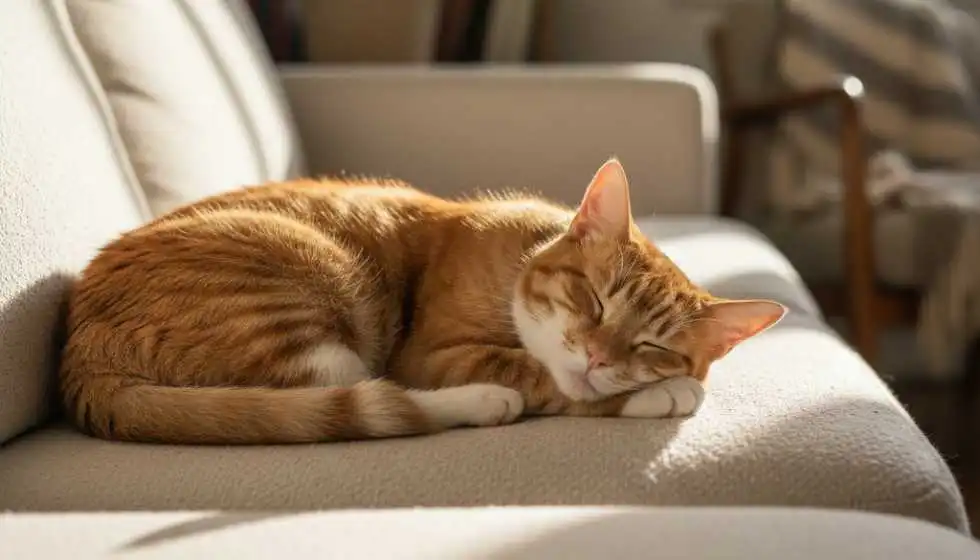
4. The Curled-Up Position (Security & Energy Conservation)
In this classic position, your cat curls into a tight ball with their tail wrapped around their body.
What it means:
- Your cat feels safe but is protecting themselves
- Conserves warmth and energy
- Instinctive position rooted in wild survival behavior
- Common during colder weather or in new environments
This posture allows cats to protect vital organs while still resting comfortably.
When to pay attention:
If your cat suddenly switches to constant tight curling, avoids stretching, or seems withdrawn, it could signal:
- Stress or anxiety
- Cold environment
- Early illness or pain
Context and behavior changes matter more than the position alone.
Why Cat Sleeping Positions Matter
Your cat’s sleeping posture is like a daily emotional check-in. Over time, changes in sleep habits or positions can reveal:
- Stress or environmental changes
- Aging-related discomfort
- Temperature needs
- Emotional security levels
Observing patterns—not just single moments—helps you become a more attentive and responsive cat parent.
Final Thoughts
Cats may not speak our language, but their sleeping positions tell a story of trust, comfort, affection, and health. By learning to understand these subtle signals, you strengthen your bond and ensure your cat’s well-being.
Next time your cat drifts off to sleep, take a moment to notice how they rest—it’s their quiet way of communicating with you.
FAQs
Different cat sleeping positions reflect how safe, relaxed, or alert a cat feels. Positions like belly-up indicate trust, while curled-up sleeping helps conserve warmth and protect vital organs.
When a cat sleeps on its back, it shows complete comfort and trust. This position means the cat feels safe and has no perceived threats in its environment.
Yes, curled-up sleeping is normal and instinctive. Cats do this to stay warm, feel secure, and protect themselves, especially in cooler temperatures or unfamiliar surroundings.
The loaf position allows cats to rest while staying alert. It’s a sign your cat is calm but ready to move quickly if needed.
Sudden changes in sleeping positions, stiffness, or constant hunched postures may signal pain, stress, or illness. If combined with behavior changes, a vet check is recommended.
Cats sleep near their owners for warmth, security, and bonding. It’s a strong sign of trust and emotional attachment.

Luxifa Le is a freelance writer and animal science communicator with over six years of professional pet care experience. Passionate about making complex pet health and behavior topics easy to understand, she blends scientific accuracy with compassionate guidance to help pet owners make smarter, more confident decisions. When she isn’t writing, Luxifa is actively involved in the pet care community, advocating for responsible ownership and continued education.