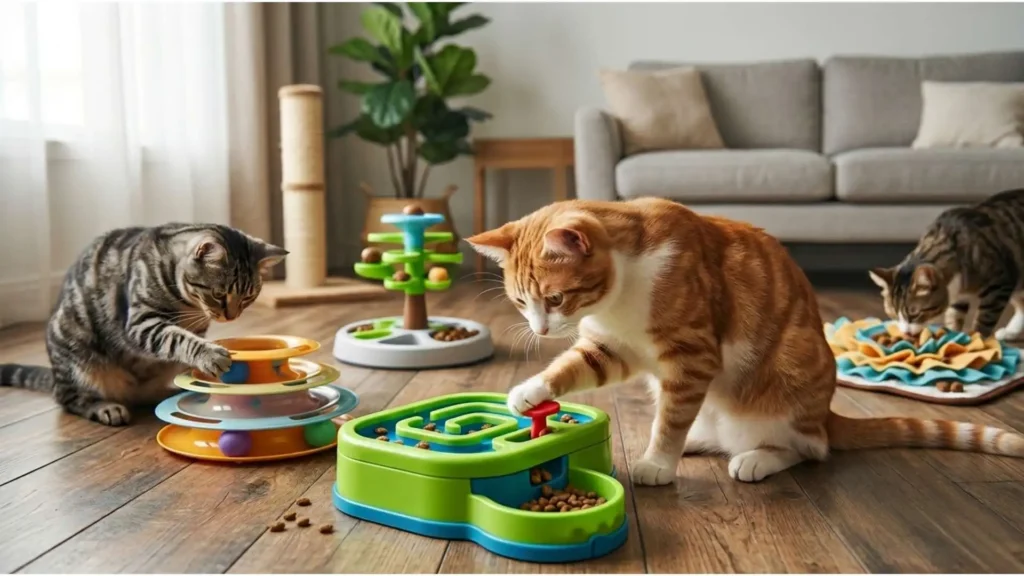
Why Puzzle Toys to Stimulate Cat Intelligence Are Becoming Important
Puzzle toys to stimulate cat intelligence are no longer considered a luxury for indoor pets. They have become a practical solution for keeping curious minds active while satisfying natural hunting instincts. A cat may spend hours observing movement, tracking sounds, and searching for hidden rewards. Without mental challenges, that energy often turns into boredom or unwanted behavior.
Interactive cat puzzles create opportunities for exploration and discovery. Instead of simply eating from a bowl or chasing a basic toy, cats must think, investigate, and solve small challenges to earn a reward. This process transforms everyday play into a mentally enriching activity.
Many pet owners focus heavily on physical exercise. Mental stimulation, however, plays an equally important role. Intelligence toys for cats help create a more balanced environment where curiosity is encouraged rather than ignored.
How Mental Stimulation Benefits Cats
A cat’s brain is designed for problem-solving. In nature, finding food requires patience, observation, and strategy. Indoor environments often remove those opportunities, making mental enrichment even more important.
Puzzle toys encourage:
- Cognitive development
- Independent play
- Problem-solving abilities
- Increased confidence
- Reduced boredom
- Better focus during activities
When cats encounter a challenge and successfully solve it, they experience a rewarding sense of achievement. This positive reinforcement motivates them to continue exploring and learning.
The Connection Between Hunting Instincts and Puzzle Toys
Every cat carries the instincts of a natural hunter. Even the most relaxed indoor companion retains the desire to stalk, chase, and capture prey.
Puzzle feeders and interactive toys tap directly into these behaviors. Instead of receiving food immediately, the cat must work for it. This mimics the sequence of searching, tracking, and obtaining a reward.
The result is often a more satisfied and engaged pet. The activity feels meaningful because it aligns with deeply rooted instincts rather than offering passive entertainment.
9 Puzzle Toys to Stimulate Cat Intelligence and Unlock Natural Hunting Skills
Not all puzzle toys challenge the mind in the same way. Some focus on food rewards, while others encourage exploration or object manipulation.
Many pet owners combine puzzle feeders with interactive cat toys to create a more stimulating indoor environment.
1. Treat Ball Puzzle Toys
Treat ball puzzle toys combine physical activity with mental engagement. Small treats are placed inside a hollow ball, and cats must roll, bat, or push it around to release the rewards. Unlike a regular food bowl, the challenge requires trial and error, helping cats learn the connection between actions and outcomes. This type of puzzle is particularly useful for food-motivated cats that need extra stimulation throughout the day. The unpredictable movement of the ball also mimics prey behavior, encouraging natural hunting instincts while turning snack time into an interactive experience.
2. Sliding Compartment Puzzle Boards
Sliding puzzle boards contain hidden compartments covered by movable panels. To access treats, cats must use their paws to slide doors in different directions. The process encourages concentration and persistence because the reward is visible but not immediately available. Over time, many cats develop strategies to solve the puzzle more efficiently. These boards are excellent for improving problem-solving skills and preventing boredom, especially for indoor cats that have limited opportunities to explore and hunt naturally.
3. Tunnel Puzzle Feeders
Tunnel puzzle feeders challenge cats to retrieve treats from narrow pathways and hidden channels. Instead of eating food instantly, cats must reach, scoop, and maneuver their paws through different openings. The activity slows feeding while engaging multiple senses. Cats rely on sight, smell, and touch to locate rewards, creating a more enriching feeding experience. Tunnel feeders are particularly beneficial for energetic cats that enjoy investigating confined spaces and exploring hidden areas around the home.
4. Rotating Disc Puzzle Toys
Rotating disc puzzles feature circular compartments that move when nudged or pawed. Treats remain hidden until the correct section rotates into place. This design teaches patience because random pawing often produces limited results. Cats gradually learn that deliberate actions lead to rewards. The rotating motion creates a constantly changing challenge, making the toy interesting even after repeated use. For curious cats that enjoy experimenting with objects, rotating puzzle toys provide an excellent mental workout.
5. Stackable Cup Puzzles
Stackable cup puzzles are simple yet surprisingly effective. Small treats are hidden beneath cups arranged in different patterns. Cats must determine which cup contains the reward and figure out how to remove or move it. This activity encourages memory development and observational skills. As cats become more experienced, the arrangement can be changed to increase difficulty. The challenge resembles a hunting scenario where a target is hidden from view, requiring investigation and persistence before success is achieved.
6. Interactive Puzzle Boxes
Interactive puzzle boxes contain multiple compartments, holes, and obstacles that conceal treats or toys. Cats must reach inside, explore openings, and manipulate objects to access rewards. Because each compartment presents a different challenge, the toy keeps cats engaged longer than many traditional play options. Puzzle boxes encourage independent problem-solving and provide an outlet for natural curiosity. They are especially useful for intelligent cats that quickly lose interest in basic toys and require more complex mental stimulation.
7. Maze Feeding Trays
Maze feeding trays transform mealtime into a cognitive challenge. Food is distributed throughout winding channels instead of being placed in a single bowl. Cats must use their paws and tongues strategically to navigate the maze and retrieve each piece of food. This process slows eating speed and encourages active participation during feeding sessions. The effort required to access food mimics the challenge of searching for prey, helping satisfy instinctive behaviors while promoting healthier eating habits.
8. Lever-Based Puzzle Toys
Lever-based puzzles introduce a more advanced level of interaction. Cats must push, pull, or press specific components to unlock hidden rewards. At first, many cats rely on experimentation, but repeated play helps them recognize patterns and understand cause-and-effect relationships. These toys are particularly valuable for highly intelligent cats that need a greater challenge than standard treat dispensers. Successfully operating a lever mechanism provides mental stimulation while boosting confidence and encouraging continued exploration.
9. Multi-Level Intelligence Puzzles
Multi-level intelligence puzzles combine several challenges into one toy. A cat may need to slide a door, rotate a compartment, and move an obstacle before reaching the reward. Because the puzzle requires multiple steps, it keeps cats engaged for longer periods and prevents them from solving the challenge too quickly. These advanced toys are ideal for experienced puzzle users that have already mastered simpler designs. By combining different problem-solving tasks, multi-level puzzles provide one of the most comprehensive forms of mental enrichment available for cats.
Signs That a Cat Needs More Mental Enrichment
Many behavioral issues stem from insufficient stimulation rather than disobedience.
A cat may benefit from puzzle toys if it frequently:
- Knocks objects off surfaces
- Seeks constant attention
- Overeats from boredom
- Appears restless throughout the day
- Shows excessive nighttime activity
- Loses interest in standard toys quickly
Introducing challenging activities can redirect energy toward productive and rewarding experiences.
Choosing the Right Puzzle Toy
Every cat approaches challenges differently. Some prefer food-based rewards, while others enjoy exploring moving parts or hidden compartments.
Consider:
Age and Experience
Beginners often become frustrated with complex puzzles. Simple designs allow confidence to build gradually before introducing advanced challenges.
Motivation
Food-motivated cats typically respond well to treat puzzles. Cats driven by curiosity may enjoy toys that reveal hidden objects or moving components.
Difficulty Level
The ideal puzzle creates a challenge without becoming impossible. Success should feel achievable while still requiring effort.
Safety and Durability
Puzzle toys should be made from sturdy, pet-safe materials that withstand regular use and enthusiastic play.
How Puzzle Toys Reduce Boredom in Indoor Cats
Indoor cats encounter fewer environmental challenges than outdoor animals. While indoor living offers safety, it can also limit opportunities for exploration.
Puzzle toys introduce unpredictability. Every interaction presents a chance to discover something new. This variety helps break repetitive routines and creates a more dynamic environment.
A mentally engaged cat often spends less time seeking entertainment through destructive behaviors. Instead, attention shifts toward productive activities that satisfy natural curiosity.
Creating a Daily Enrichment Routine
Mental stimulation works best when incorporated into everyday life rather than offered occasionally.
A simple routine might include:
- Morning puzzle feeding sessions
- Midday independent puzzle play
- Evening interactive enrichment activities
Rotating different puzzle toys prevents predictability and maintains interest. When challenges change regularly, cats remain more engaged and motivated.
Common Features Found in High-Quality Puzzle Toys
The most effective puzzle toys share several characteristics.
Adjustable Difficulty
As skills improve, challenges can be increased to maintain engagement.
Reward-Based Design
Positive reinforcement encourages continued participation and learning.
Multiple Interaction Methods
Pushing, pulling, pawing, and rotating components create a richer experience.
Durable Construction
Long-lasting materials ensure the toy remains safe and functional through repeated use.
Why Smart Toys Support Long-Term Cognitive Health
Mental exercise benefits cats throughout every stage of life. Regular problem-solving activities encourage active thinking and help maintain engagement with the surrounding environment.
Younger cats develop confidence and learning skills, while older cats benefit from continued cognitive stimulation. Puzzle toys create opportunities for exploration that remain rewarding regardless of age.
Rather than serving as simple entertainment, these toys become valuable tools for supporting curiosity, intelligence, and overall well-being. When cats are encouraged to think, investigate, and solve challenges, everyday play becomes a meaningful part of a healthier and more enriched life.

Christina Donnelly is a writer, editor, and animal welfare advocate who loves to spread cheer in the form of cute animal photos and interesting animal facts.
Christina has worked in digital media for over a decade. She began her career as an Editor at Nickelodeon, then transitioned into lifestyle content, including pets. Her current 9-to-5 is with Anthem Health, where she works as a content lead. A former Spruce editor, Christina has been contributing content to The Spruce Pets for over two years.
Christina has experience managing an animal welfare organization, volunteering at numerous animal shelters and sanctuaries, and writing on all things animals.
Christina received her Bachelor of Arts degree from Marist College in 2010. There, she was the president of FoxP.A.W. (People for Animal Welfare).
Title: Writer
Education: Marist College
Location: Brooklyn, New York
Expertise: Dogs