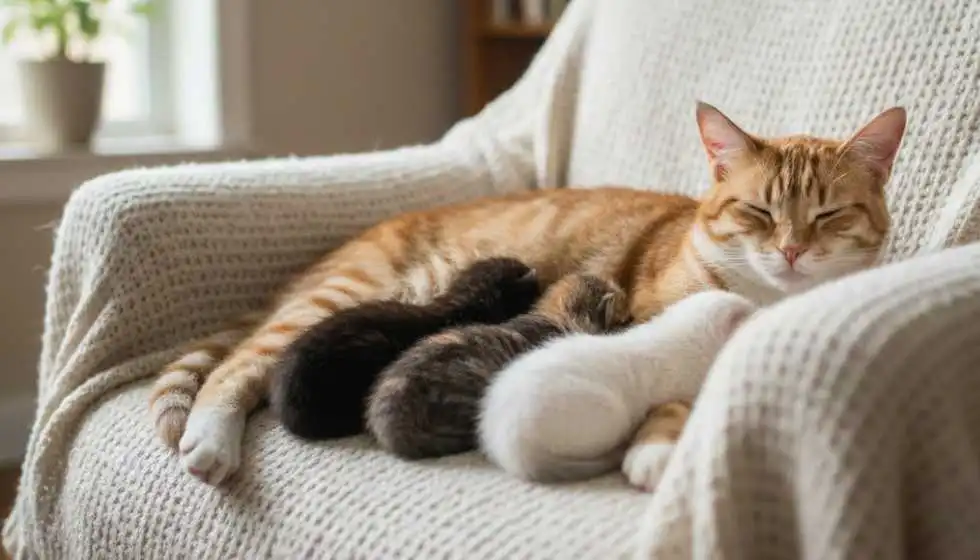
Have you ever wondered how long it will take a mother cat to forget her kittens and whether she does remember her babies? There is no denying that most people wonder about the relationship between a mother cat and her babies and how strong it might be.
Mother cats usually do not forget their kittens immediately after separation, but their recognition may fade over time as kittens grow and their scent changes. Cats mainly rely on smell to identify familiar individuals.
In terms of how long does it take for a mother cat to forget her kittens, the problem becomes more complicated than just providing a timeframe. A mother cat’s memory of her kittens is determined by smell and separation period, and even the weaning process itself.
If you are looking for the answer on how long does it take for a mother cat to forget her kittens after separation, then you should know that the bond usually fades away within several weeks after the weaning.
Understanding Feline Maternal Instincts
Mother cats (queens) are driven by powerful instincts immediately after giving birth. These behaviors are controlled largely by hormones such as oxytocin and prolactin, which promote bonding, nursing, grooming, and protective behavior.
Right after birth, a queen recognizes her kittens through:
- Scent (primary recognition method)
- Sound (kitten vocalizations)
- Physical contact
These instincts are strongest during the first few weeks of life, when kittens are completely dependent on their mother.
The First 6 Weeks: Peak Bonding Phase
During the newborn stage (0–3 weeks), kittens rely on their mother for:
- Warmth
- Nutrition
- Stimulation for urination and defecation
- Protection
From weeks 4 to 6, kittens begin exploring, eating soft foods, and developing independence. At this stage, the mother cat slowly starts distancing herself—not because she forgets them, but because nature prepares both mother and kittens for separation.
This is a normal and healthy transition.
Weaning and Emotional Detachment (6–8 Weeks)
Weaning triggers noticeable behavioral changes:
- The mother may nurse less frequently
- She may walk away when kittens attempt to feed
- Mild irritability or avoidance can occur
This emotional detachment is biologically intentional. In the wild, lingering attachment would weaken survival chances.
Important point: Detachment does not equal forgetting.
When Are Kittens Usually Separated?
Most veterinarians recommend separating kittens from their mother at 8–12 weeks of age. By this time:
- Kittens are socially developed
- They can eat solid food
- Maternal hormones begin to decline
After separation, many mother cats:
- Vocalize for a few days
- Search familiar nesting areas
- Appear restless or subdued
These behaviors usually fade within days to a few weeks.
How Long Does a Mother Cat Remember Her Kittens?
Quick Summary:
A mother cat may remember her kittens for weeks to several months, but recognition fades over time.
Detailed Explanation:
Cats have excellent associative and scent-based memory, but their memory is tied to:
- Repeated interaction
- Familiar smells
- Emotional reinforcement
Once kittens grow, their scent changes. If there is no ongoing contact, the mother cat’s brain gradually deprioritizes that memory.
Most feline behavior experts agree:
- After a few weeks to a few months, active emotional attachment fades
- After 6–12 months, recognition is unlikely unless there is scent familiarity
Factors That Influence Whether a Mother Cat “Forgets”
Several variables determine how long maternal memory lasts:
1. Length of Separation
The longer the separation, the lower the chance of recognition.
2. Continued Contact
Regular interaction strengthens memory retention.
3. Indoor vs Outdoor Environment
Indoor cats may retain bonds longer due to lower survival stress.
4. Stress Levels
Stress accelerates emotional detachment.
5. Individual Personality
Some cats are naturally more maternal and emotionally attached.
Feral Cats vs Domestic Cats: Key Differences
Feral cats
- Separate from kittens earlier
- Emotional detachment happens faster
- Survival instincts dominate
Domestic cats
- Show longer maternal behaviors
- May appear to “miss” kittens
- Are more likely to recognize offspring if reunited early
This difference exists because feral cats must conserve energy and reduce vulnerability.
Domestic cats living in stable home environments often show longer-lasting emotional bonds and better adjustment after separation, especially when their indoor cats’ emotional well-being is properly supported.
Can a Mother Cat Recognize Her Grown Kittens Later
Sometimes—but not always.
Reunions are more successful when:
- Separation was short (a few weeks)
- Kittens still carry familiar scent cues
- The mother cat is calm and unstressed
If kittens return months later, the mother may:
- Treat them like unfamiliar cats
- Show indifference or mild aggression
- Fail to recognize them entirely
This is normal feline behavior and not a sign of cruelty.
Signs a Mother Cat Is Adjusting After Separation
Normal post-separation behaviors include:
- Temporary vocalizing
- Reduced appetite
- Searching nesting spots
- Increased clinginess toward humans
These usually resolve within 1–2 weeks.
How to Support a Mother Cat After Her Kittens Leave
To ease the transition:
- Maintain a consistent routine
- Provide extra affection and playtime
- Remove kitten scents gradually
- Ensure proper nutrition and hydration
- Schedule a vet check if stress persists
A calm environment helps her emotional reset.
Final Thoughts
A mother cat doesn’t “forget” her kittens overnight—but feline memory works differently from human emotion. Her bond is strongest during dependency and fades naturally as independence begins.
In most cases, a mother cat remembers her kittens for weeks or months, but long-term recognition depends on scent, interaction, and environment. This process is normal, healthy, and driven by survival instincts—not lack of love.
Understanding this helps cat owners make informed, compassionate decisions during separation.
FAQs
Mother cats do not usually forget their kittens immediately after separation. They may remember their kittens through scent and familiar experiences for some time, especially if they spent several weeks nursing and caring for them. However, their attachment naturally decreases as kittens grow older and become independent.
The time a mother cat remembers her kittens can vary depending on her personality, the length of time she raised them, and the circumstances of separation. Some cats may recognize familiar scents for months, while others may gradually lose recognition as the scent changes.
Mother cats may show temporary signs of searching, calling, or restlessness after their kittens leave. However, cats usually adjust quickly because their natural role is to raise kittens until they can survive independently.
A mother cat may not always recognize her grown kittens after a long separation because cats rely heavily on scent rather than family relationships. Once kittens develop a different smell, recognition may become difficult.
Yes, smell plays an important role in how cats recognize each other. A mother cat identifies her kittens mainly through their unique scent, which changes as they grow older.
Some mother cats may experience temporary stress or behavioral changes after their kittens leave, such as searching or increased vocalization. Most cats adjust naturally once their hormones and maternal instincts return to normal.
Kittens usually become more independent around 8 to 12 weeks of age. During this period, they learn important social behaviors, eating habits, and survival skills from their mother.

Claudia Guthrie is a writer and animal enthusiast with experience working for a leading equine veterinary hospital and learning more about canine development and obedience. She has personal experience with dogs, cats, rabbits, gerbils, and horses, and a lifelong interest in researching and writing about the latest in animal care, training, and breed profiles.