Owning a Persian cat isn’t just having a pet — it’s adopting a walking cloud with royal attitude. Their long, luxurious coat is their pride, but it also demands special care. One wrong grooming product can turn silky fur into a tangled nightmare.
That’s why choosing the best shampoo for Persian cats is not optional — it’s essential for healthy skin, shiny fur, and a happy, itch-free cat.
Why Shampoo Choice Matters So Much for Persian Cats
Think of your Persian cat’s coat like a designer silk dress. Beautiful, expensive, and very unforgiving if treated wrong.
Persian cats have:
- Long, dense, double coats
- Sensitive skin
- Higher risk of matting, dryness, and allergies
Using the wrong shampoo (especially human or dog shampoo) can cause:
- Dry, flaky skin
- Excessive shedding
- Dull, rough fur
- Itching and irritation
- Increased tangles and knots
Important Skin Fact (Most Owners Don’t Know)
Cat skin has a pH of around 6.4–6.6, while human skin is about 5.5. That difference may sound small, but it’s enough to cause serious irritation if you use human products on cats.
Experts also recommend gentle ingredients for Persians, especially oatmeal, aloe, and hypoallergenic formulas.
👉 This is why cat-specific, pH-balanced shampoo is mandatory for Persian cats.
What to Look for in the Best Shampoo for Persian Cats
Before buying any shampoo, treat it like reading ingredients on baby products — carefully.
Must-Have Features
| Feature | Why It Matters |
|---|---|
| 🧴 Cat-specific formula | Designed for feline skin |
| 🌡 pH-balanced | Prevents itching & dryness |
| 🌿 Natural ingredients | Reduces allergies |
| 💧 Moisturizing & conditioning | Prevents matting |
| ❌ No sulfates, parabens, dyes | Avoids irritation |
Christian Adams states that cat skin pH is around 6.4–6.6 whereas human skin is ~5.5, so shampoos made for humans often are too acidic for cats — may cause itching, dryness or skin problems.
Best Ingredients for Persian Cats
Look for shampoos that include:
- Colloidal oatmeal – Soothes itchy, dry skin
- Aloe vera – Hydrates and calms irritation
- Coconut-based cleansers – Gentle but effective
- Vitamin E – Promotes skin health
🚫 Avoid shampoos with alcohol, artificial fragrance, or harsh detergents.
Best Shampoos for Persian Cats (Vet-Approved Picks)
These shampoos are widely trusted by groomers and Persian cat owners for safety and performance.
1. Hepper Colloidal Oatmeal Pet Shampoo (Best Overall)
Why it’s great:
- Ultra-gentle formula
- Perfect for sensitive Persian skin
- Reduces itching and dryness
- Leaves fur soft, fluffy, and manageable
- Ideal for regular bathing
- Safe for long coats
- Soap-free and moisturizing
2. Earthbath Oatmeal & Aloe Cat Shampoo (Best Natural Option)
Why it’s great:
- Made with natural, biodegradable ingredients
- Soothes irritated skin
- Leaves a clean, light scent
- Enhances coat shine
- No artificial colors or parabens
- Excellent for allergy-prone cats
3. Burt’s Bees Hypoallergenic Cat Shampoo (Best for Extra-Sensitive Skin)
Why it’s great:
- Extremely mild
- No sulfates, fragrances, or chemicals
- Ideal for kittens and senior Persians
- Gentle enough for frequent use
- Helps maintain natural skin oils
How Often Should You Bathe a Persian Cat?
Bathing too often can strip natural oils, while bathing too little leads to grease and mats.
Recommended Bathing Schedule
- Every 4–6 weeks for adult Persian cats
- More frequently if your cat:
- Gets oily fur
- Has skin issues (vet advice needed)
- Shows heavy matting
Regular brushing (daily or every other day) can reduce the need for frequent baths.
Many pet owners struggle with how often they should bathe their long-haired cats. Understanding the ideal bathing schedule for Persian cats ensures their skin remains moisturized while their thick fur stays fresh and manageable throughout the year.
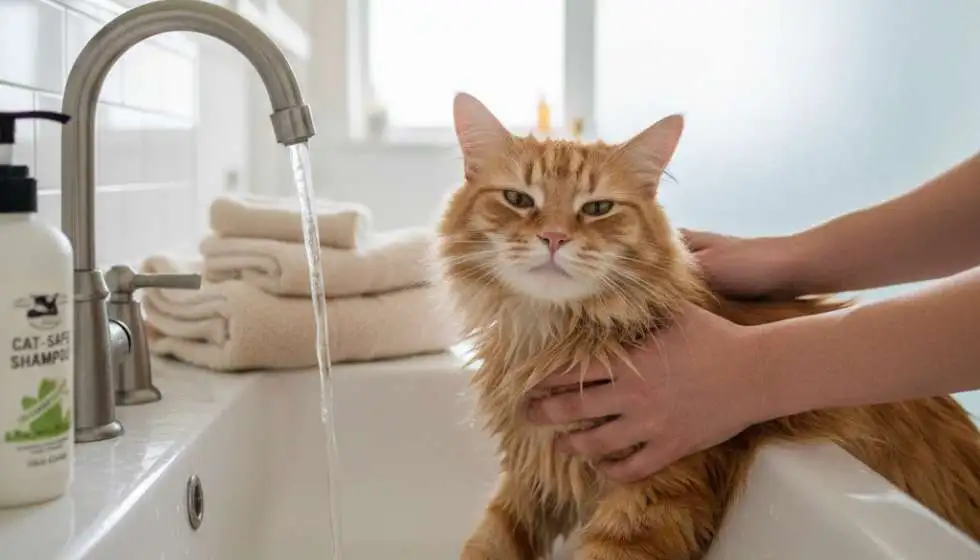
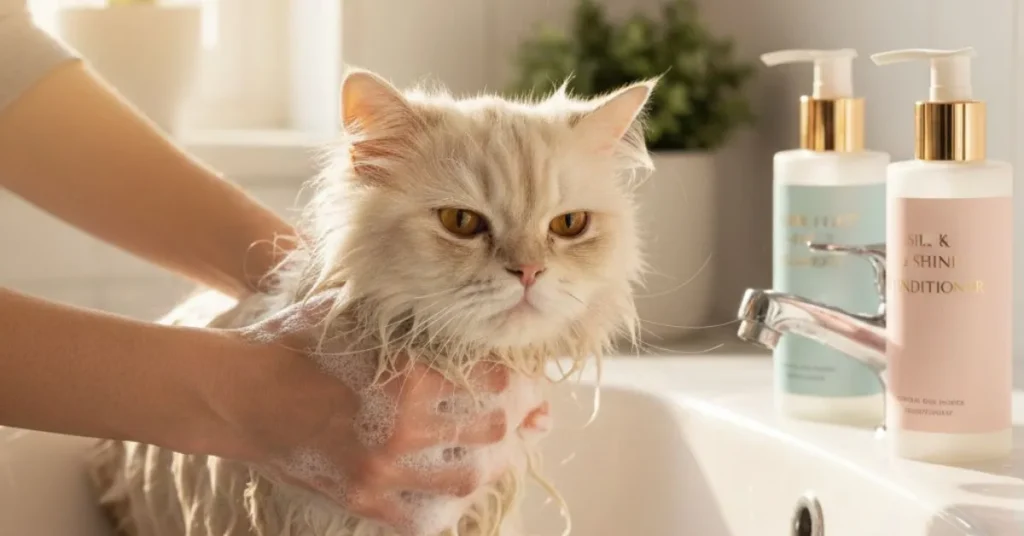
How to Bathe a Persian Cat (Stress-Free Method)
Bathing a Persian doesn’t have to feel like a survival mission.
Step-by-Step:
- Brush before bathing – removes knots and loose hair
- Use lukewarm water – never hot
- Dilute the shampoo – makes rinsing easier
- Massage gently – like a spa, not a wrestling match
- Rinse thoroughly – leftover shampoo causes itching
- Towel dry + low-heat dryer – keep distance
- Reward with treats – very important
Common Shampoo Mistakes to Avoid
- Using human shampoo
- Using dog shampoo
- Bathing too frequently
- Not rinsing properly
- Using heavily scented products
Even “natural” human shampoos are not safe for cats.
Final Thoughts
Your Persian cat is not “just a cat.”
It’s:
- A cloud with paws
- A fluffy diva
- A living luxury pillow
Choosing the best shampoo for Persian cats means:
- Healthier skin
- Softer, shinier fur
- Fewer mats
- Happier cuddles
Good shampoo = Good fur = Happy cat = Happy you.
FAQs
The best shampoo for Persian cats is a cat-specific, pH-balanced shampoo with gentle ingredients like oatmeal, aloe vera, and vitamin E. These help protect sensitive skin and keep long fur soft and tangle-free.
No. Human shampoos are not safe for Persian cats because they are too acidic for feline skin and can cause dryness, itching, and irritation.
Persian cats should be bathed every 4–6 weeks. Bathing more often can dry the skin, while less frequent baths may lead to oily fur and matting.
Yes. Colloidal oatmeal shampoo is excellent for Persian cats as it soothes itchy skin, reduces dryness, and helps maintain a soft, healthy coat.
Only if the shampoo is kitten-safe and fragrance-free. Always check the label to ensure it’s suitable for kittens and extra-sensitive skin.
Avoid shampoos containing sulfates, parabens, alcohol, artificial dyes, and strong fragrances, as these can irritate sensitive Persian cat skin.

Luxifa Le is a freelance writer and animal science communicator with over six years of professional pet care experience. Passionate about making complex pet health and behavior topics easy to understand, she blends scientific accuracy with compassionate guidance to help pet owners make smarter, more confident decisions. When she isn’t writing, Luxifa is actively involved in the pet care community, advocating for responsible ownership and continued education.